Getting enough fiber is an important part of maintaining a healthy diet. It supports digestion, helps you feel satisfied after meals, and contributes to overall health. However, many people do not eat enough fiber because their daily meals lack fruits, vegetables, beans, and whole grains.
The good news is that increasing your fiber intake does not require complicated meals or expensive ingredients. Some of the highest fiber foods include lentils, beans, chia seeds, raspberries, peas, and whole grains. These foods are easy to include in everyday meals and provide other valuable nutrients.
Let’s explore the best fiber-rich foods, their approximate fiber content, and simple ways to add them to your diet.
According to trusted health organizations such as the Mayo Clinic and MedlinePlus, eating fiber-rich foods such as fruits, vegetables, beans, and whole grains can support healthy digestion and overall well-being.
What Is Dietary Fiber?
Dietary fiber is a type of carbohydrate found in plant-based foods that your body cannot fully digest. It passes through your digestive system and helps support normal bowel movements.
There are two main types of fiber:
- Soluble fiber: Dissolves in water and can help support healthy cholesterol and blood sugar levels.
- Insoluble fiber: Adds bulk to stool and helps food move through the digestive system.
Eating different plant-based foods helps you get both types.
20 Highest Fiber Foods You Should Eat
Here are some excellent sources of dietary fiber and their approximate amounts per serving.
1. Lentils
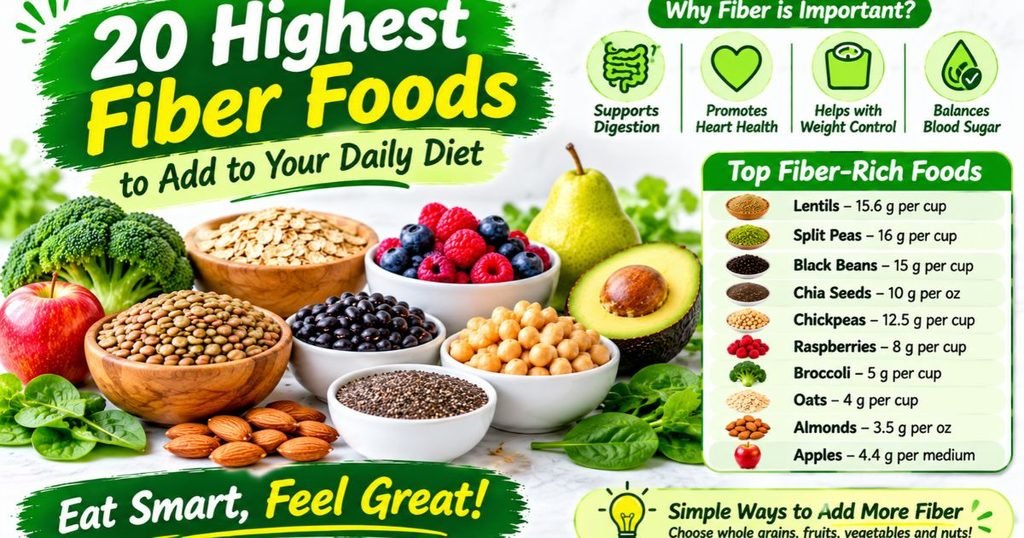
Lentils are among the best sources of fiber. One cup of cooked lentils provides approximately 15.6 grams. They also contain plant-based protein and work well in soups, curries, and salads.
2. Split Peas
One cup of cooked split peas contains around 16 grams of fiber. Add them to homemade soups or vegetable dishes for a filling meal.
3. Black Beans
One cup of cooked black beans provides approximately 15 grams of fiber. They are also a useful source of plant protein and can be added to rice bowls, salads, and wraps.
4. Chia Seeds
One ounce (28 grams) of chia seeds contains approximately 10 grams of fiber. Sprinkle them over oatmeal, yogurt, or smoothies.
5. Chickpeas
One cup of cooked chickpeas provides around 12.5 grams of fiber. They are excellent in hummus, curries, and salads.
6. Raspberries
One cup of raspberries contains approximately 8 grams of fiber. Enjoy them fresh or add them to your breakfast.
7. Blackberries
Blackberries provide around 7.6 grams of fiber per cup. They are a nutritious snack and pair well with yogurt.
8. Green Peas
One cup of cooked green peas provides approximately 8.8 grams of fiber. Add them to rice, pasta, or vegetable dishes.
9. Avocado
Half an avocado contains approximately 5 grams of fiber. It also provides healthy unsaturated fats and makes a useful addition to salads and sandwiches.
10. Pears
One medium pear with its skin provides around 5.5 grams of fiber. Eating the skin helps you get more fiber.
11. Broccoli
One cup of cooked broccoli contains approximately 5 grams of fiber. It also provides vitamin C and other beneficial nutrients.
12. Oatmeal
One cup of cooked oatmeal provides around 4 grams of fiber. Oats contain beta-glucan, a soluble fiber associated with heart-health benefits.
13. Almonds
One ounce of almonds (about 23 nuts) contains approximately 3.5 grams of fiber. They also provide protein, healthy fats, and vitamin E.
14. Apples
One medium apple with its skin contains approximately 4.4 grams of fiber. It is an easy snack to include in your daily routine.
15. Whole-Wheat Pasta
One cup of cooked whole-wheat pasta provides approximately 6 grams of fiber. It is a useful alternative to refined pasta.
16. Quinoa
One cup of cooked quinoa contains approximately 5 grams of fiber. Use it in salads or as a replacement for some refined grains.
17. Barley
One cup of cooked barley provides approximately 6 grams of fiber. It works well in soups, stews, and grain bowls.
18. Sweet Potatoes
One medium baked sweet potato with its skin provides around 4 grams of fiber. Serve it with vegetables or a protein source.
19. Flaxseeds
Two tablespoons of ground flaxseeds provide approximately 4 grams of fiber. Add them to smoothies, oatmeal, or yogurt.
20. Popcorn
Three cups of air-popped popcorn contain approximately 3.5 grams of fiber. It can be a convenient whole-grain snack when prepared without excessive butter or salt.
High Fiber Foods List: Quick Comparison
| Food | Serving | Fiber |
|---|---|---|
| Split peas | 1 cup cooked | 16 g |
| Lentils | 1 cup cooked | 15.6 g |
| Black beans | 1 cup cooked | 15 g |
| Chia seeds | 1 oz | 10 g |
| Chickpeas | 1 cup cooked | 12.5 g |
| Raspberries | 1 cup | 8 g |
| Blackberries | 1 cup | 7.6 g |
| Pear | 1 medium | 5.5 g |
| Broccoli | 1 cup cooked | 5 g |
| Oatmeal | 1 cup cooked | 4 g |
Values are approximate and depend on serving size and preparation.
How Much Fiber Do You Need Daily?
A commonly used guideline for adults is approximately 14 grams of fiber per 1,000 calories consumed. Depending on age, sex, and energy needs, many adults require around 25–38 grams daily.
You can reach your daily target by including different fiber sources throughout your meals rather than relying on one food.
Simple Ways to Eat More Fiber
Try these practical habits:
- Add fruit such as apples, pears, and berries to breakfast.
- Include beans or lentils in lunch and dinner.
- Choose whole-grain bread and pasta more often.
- Sprinkle chia or ground flaxseeds over oatmeal.
- Eat vegetables regularly with your main meals.
- Drink enough water throughout the day.
Increase fiber gradually to reduce bloating and gas while your digestive system adjusts.
for more, read our guide What is a balanced diet?
Can I Eat Fish on a Vegan Diet?
Related: What Foods Have Fiber? The Best High-Fiber Foods and How to Eat Them
Frequently Asked Questions
Which food has the highest fiber?
Split peas and lentils are excellent sources, providing approximately 16 grams and 15.6 grams per cooked cup, respectively.
Which fruits are highest in fiber?
Raspberries and blackberries are particularly good choices. Pears and apples with their skin are also excellent options.
Are eggs high in fiber?
No. Eggs contain protein and other nutrients but naturally have no dietary fiber. Pair them with vegetables, fruit, or whole-grain toast.
Can high-fiber foods help with weight management?
Yes. Many fiber-rich foods help you feel fuller for longer, which may support appetite management. However, overall eating habits and calorie intake also matter.
Conclusion
Adding more fiber to your diet can be simple. Lentils, beans, chia seeds, berries, broccoli, oats, and whole grains are excellent choices that fit into everyday meals.
Start with small changes, such as adding fruit to breakfast or including lentils in your lunch. Focus on variety and consistency rather than changing your entire diet overnight. A balanced diet containing enough fiber can support digestion and contribute to better overall health.
Written by Kashan | FitnessMethodology.com — Your trusted destination for practical fitness tips, smarter nutrition, and healthier living. We empower you to make smarter choices, build healthier habits, and achieving your fitness goals .
Health note: This article is general information, not medical advice. Check with a doctor or registered dietitian before making big changes to your diet or training, especially if you have a health condition, are pregnant or take medication. Read our full disclaimer.