A balanced diet provides your body with the nutrients and energy it needs to stay healthy, support daily activities, and function properly. It includes a variety of foods, such as fruits, vegetables, whole grains, protein-rich foods, and healthy fats.
You do not need expensive foods or a strict meal plan to eat healthily. Simple ingredients such as rice, lentils, eggs, vegetables, oats, and fruit can help you build nutritious meals. Tracking your intake? Here is how many calories are in an egg.
Why Is a Balanced Diet Important?
Eating a balanced diet helps your body get the nutrients it needs for everyday life. According to the World Health Organization (WHO), a healthy diet emphasizes variety, balance, moderation, and adequate nutrition.
The benefits of a balanced diet include:
- Steady energy: Carbohydrates and fats provide energy for daily activities.
- Muscle growth and repair: Protein supports the maintenance and repair of body tissues.
- Healthy digestion: Fiber from fruits, vegetables, and whole grains supports normal bowel function.
- Strong bones: Calcium, vitamin D, and protein contribute to bone health.
- Long-term health: Healthy eating patterns can help reduce the risk of certain chronic diseases.
Your nutritional needs depend on factors such as age, activity level, health, and fitness goals.
What Are the Main Components of a Balanced Diet?
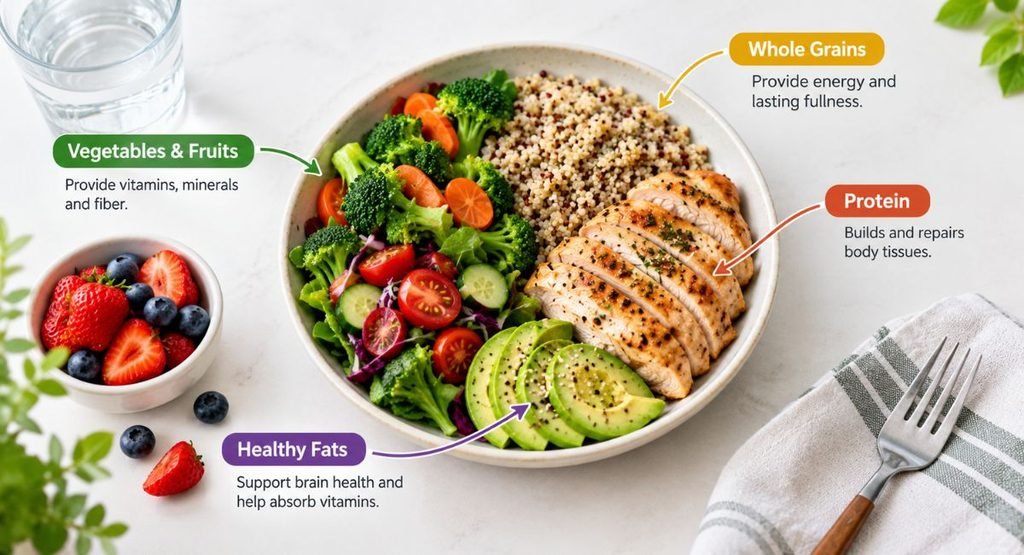
A healthy eating pattern includes several essential nutrients.
1. Carbohydrates
Carbohydrates provide energy for your body. Good sources include oats, potatoes, whole-grain bread, rice, fruits, and whole-wheat roti. Choose fiber-rich options regularly, but remember that refined grains can also fit into a balanced diet.
2. Protein
Protein helps build and repair muscles and other tissues. Sources include eggs, fish, chicken, milk, yogurt, beans, lentils, and tofu. If you eat plant-based, our guide on whether you can eat fish on a vegan diet covers easy vegan swaps. Including a protein source in your main meals is a practical starting point for fitness beginners.
3. Healthy Fats
Your body needs fats to absorb certain vitamins and obtain essential fatty acids. Choose sources such as nuts, seeds, avocados, and vegetable oils more often than foods high in saturated or trans fats.
4. Vitamins, Minerals, and Fiber
Fruits, vegetables, legumes, whole grains, and other nutritious foods supply vitamins, minerals, and fiber. These nutrients support normal body functions and digestive health.
5. Water
Water helps regulate body temperature and supports many essential processes. Drink regularly throughout the day, adjusting your intake for exercise, weather, and individual needs.
What Foods Should You Eat for a Balanced Diet?
Aim to include different food groups throughout your day.
| Food group | Examples |
|---|---|
| Fruits and vegetables | Apples, bananas, spinach, carrots |
| Whole grains | Oats, brown rice, whole-wheat roti |
| Protein foods | Eggs, chicken, beans, lentils |
| Dairy or alternatives | Milk, yogurt, fortified soy drinks |
| Healthy fats | Nuts, seeds, vegetable oils |
For a simple guide to meal portions, Harvard’s Healthy Eating Plate recommends filling approximately half your plate with vegetables and fruits, one-quarter with whole grains, and one-quarter with healthy protein sources.
Example of a Balanced Daily Diet
Here is a simple example you can adapt to your preferences and nutritional needs.
- Breakfast: Oatmeal with milk and a banana.
- Lunch: Rice, lentil curry, vegetables, and plain yogurt.
- Snack: Fruit and a handful of nuts, if hungry.
- Dinner: Chicken, fish, tofu, or beans with whole-wheat roti and vegetables.
These meals are examples, not a personalized meal plan. Adjust portions according to your hunger, activity, and nutritional requirements.
Tips for Maintaining a Balanced Diet
You can improve your eating habits without changing everything at once.
- Include fruits or vegetables in more meals.
- Choose whole grains and fiber-rich foods regularly.
- Include protein-rich foods throughout the day.
- Drink water regularly.
- Limit frequent sugary drinks and foods high in sodium.
- Choose affordable, seasonal ingredients.
- Enjoy your favorite foods in moderation rather than following unnecessarily strict rules.
Consistency matters more than making every meal perfect.
Related: Balanced Diet and Regular Exercise: A Simple Guide to Better Health
Frequently Asked Questions
What is a balanced diet in simple words?
A balanced diet includes a variety of foods that provide the energy, protein, fats, vitamins, minerals, and other nutrients your body needs.
Can I eat rice on a balanced diet?
Yes. Rice can be part of a balanced diet. Pair it with protein-rich foods, such as lentils or eggs, and vegetables for a more varied meal.
Is a balanced diet necessary for muscle building?
Yes. Adequate energy, protein, carbohydrates, and other nutrients support training, recovery, and muscle development.
Keep reading on fitness methodology,
The ultimate guide to pizza calories and portion control.
Conclusion
A balanced diet helps provide the nutrients your body needs to support energy, fitness, and overall health. Include a variety of fruits, vegetables, grains, protein-rich foods, healthy fats, and water in your daily routine.
Start with small, realistic changes and build healthy habits over time. The best balanced diet is one that meets your needs and fits your lifestyle.
Disclaimer: This article provides general nutrition information and does not replace individualized medical advice.
Health note: This article is general information, not medical advice. Check with a doctor or registered dietitian before making big changes to your diet or training, especially if you have a health condition, are pregnant or take medication. Read our full disclaimer.