So, what foods have fiber? Plant foods. Beans, lentils, peas, oats, chia seeds, fruits, vegetables, nuts and whole grains all contain it, while meat, fish, eggs and dairy have essentially none.
The FDA’s Daily Value for fiber is 28 grams a day on a 2,000-calorie diet, and one cup of cooked lentils covers more than half of it. Here are the best high-fiber foods, realistic serving sizes and easy ways to eat them.
What Foods Have Fiber? The Best Sources
Beans, Lentils and Peas
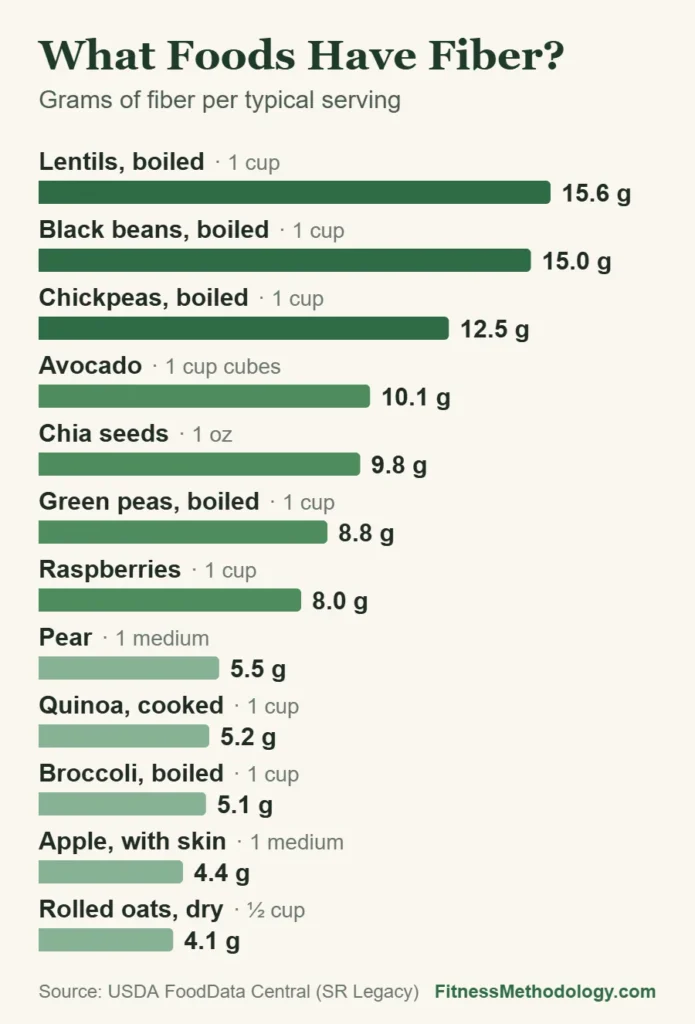
Legumes give you the biggest boost. According to USDA FoodData Central, one cup of boiled lentils has about 15.6 grams of fiber. Black beans have about 15 grams per cup and chickpeas about 12.5 grams.
How to use them: stir black beans into chili or tacos, toss chickpeas onto salads, or add red lentils to soup to thicken it. Canned beans count too. For meat-free meal ideas, see our easy vegan swaps.
Oats and Chia Seeds
Half a cup of dry rolled oats (40 grams) has about 4 grams of fiber. One ounce of chia seeds (28 grams) has about 9.8 grams.
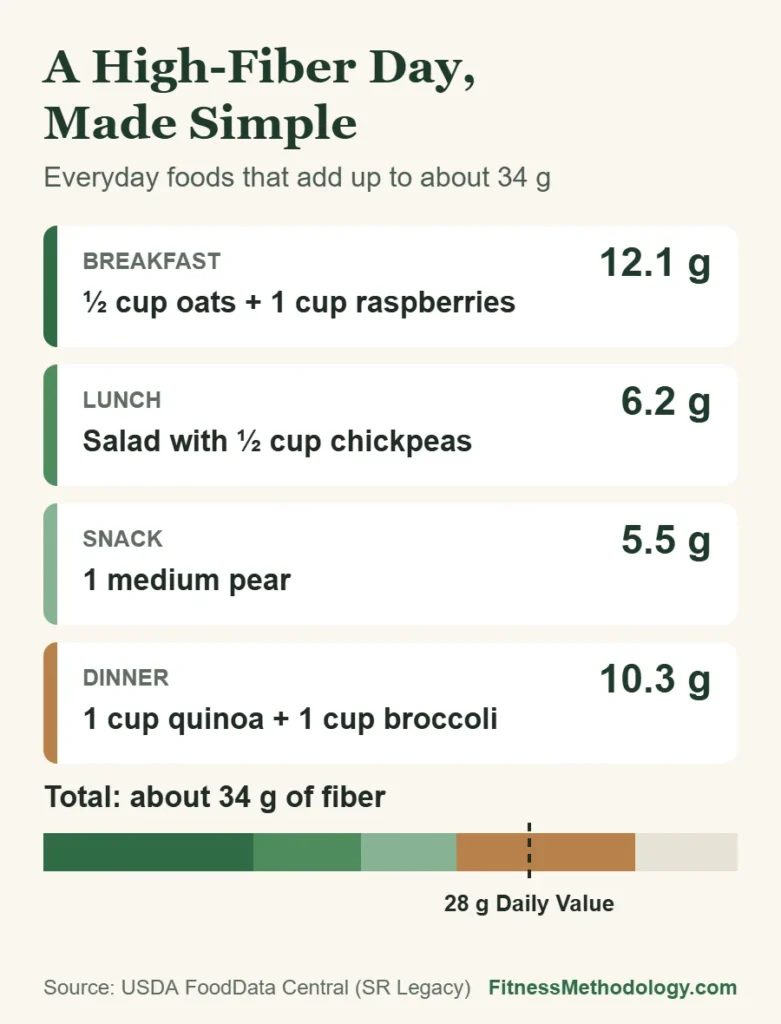
Top ½ cup of oats with 1 cup of raspberries and breakfast alone gives you about 12 grams. Sprinkle chia seeds over yogurt or blend them into smoothies.
Fruits
Raspberries have about 8 grams per cup, a medium pear about 5.5 grams and a medium apple with skin about 4.4 grams. Avocado offers roughly 10 grams per cup of cubes. Keep the skin on apples and pears; these figures include it.
Vegetables
Green peas lead at about 8.8 grams per cooked cup. A cup of boiled broccoli has about 5 grams and a medium baked sweet potato about 3.8 grams. Toss frozen peas into pasta, fried rice or soup near the end of cooking.
Whole Grains
A cup of cooked barley has about 6 grams, cooked quinoa about 5 grams, a slice of whole-wheat bread around 2 grams and 3 cups of air-popped popcorn about 3.5 grams, according to Mayo Clinic’s USDA-based fiber chart. Swap white rice for barley or quinoa a few nights a week.
High-Fiber Foods Comparison Table
| Food | Serving | Fiber (g) |
|---|---|---|
| Lentils, boiled | 1 cup (198 g) | 15.6 |
| Black beans, boiled | 1 cup (172 g) | 15.0 |
| Chickpeas, boiled | 1 cup (164 g) | 12.5 |
| Avocado | 1 cup cubes (150 g) | 10.1 |
| Chia seeds | 1 oz (28 g) | 9.8 |
| Green peas, boiled | 1 cup (160 g) | 8.8 |
| Raspberries | 1 cup (123 g) | 8.0 |
| Pear | 1 medium (178 g) | 5.5 |
| Quinoa, cooked | 1 cup (185 g) | 5.2 |
| Broccoli, boiled | 1 cup chopped (156 g) | 5.1 |
| Apple, with skin | 1 medium (182 g) | 4.4 |
| Rolled oats, dry | ½ cup (40 g) | 4.1 |
| Sweet potato, baked | 1 medium (114 g) | 3.8 |
Practical Tips for Eating More Fiber
- Add one food at a time. Mayo Clinic suggests increasing fiber over a few weeks to avoid gas and bloating.
- Drink enough fluids. Some types of fiber work best when they absorb water.
- Read the label. Fiber in bread and cereal varies by brand, so compare grams per serving.
- Build plates around plants. Adding vegetables, beans or whole grains to every plate fits naturally into a balanced diet.
Spread across a day, these foods add up quickly:
Why Fiber Is Worth the Effort
Fiber helps keep bowel movements regular, and fiber-rich foods tend to be filling, which can make portions easier to manage alongside our calorie guide. Mayo Clinic also notes that diets rich in fiber have been linked to lower rates of heart disease.
Related: 20 Highest Fiber Foods to Add to Your Daily Diet
Frequently Asked Questions
Which food has the most fiber per serving?
Lentils and black beans lead, with about 15 grams per cooked cup. Chia seeds are the most concentrated, at almost 10 grams per ounce.
Do meat, eggs or dairy have fiber?
No. Fiber comes from plants, so plain, eggs, meat, fish, milk and cheese provide essentially none.
How much fiber do I need each day?
The Daily Value on food labels is 28 grams, based on 2,000 calories. Mayo Clinic, citing U.S. dietary guidelines, puts it at about 14 grams for every 1,000 calories you eat, so your target depends on your age and energy needs.
Are fiber supplements as good as food?
Food comes first because it provides several fiber types plus vitamins and minerals. Ask your doctor or pharmacist before using a supplement, since some can affect medication absorption.
Conclusion
What foods have fiber? Beans, lentils, oats, chia seeds, vegetables, fruits, and whole grains. Add berries to breakfast, beans to lunch and a vegetable or whole grain to dinner, then build up slowly. Small swaps add up fast.
Written by Kashan | FitnessMethodology.com — Your trusted destination for practical fitness tips, smarter nutrition, and healthier living. We empower you to make smarter choices, build healthier habits, and achieving your fitness goals .
Health note: This article is general information, not medical advice. Check with a doctor or registered dietitian before making big changes to your diet or training, especially if you have a health condition, are pregnant or take medication. Read our full disclaimer.