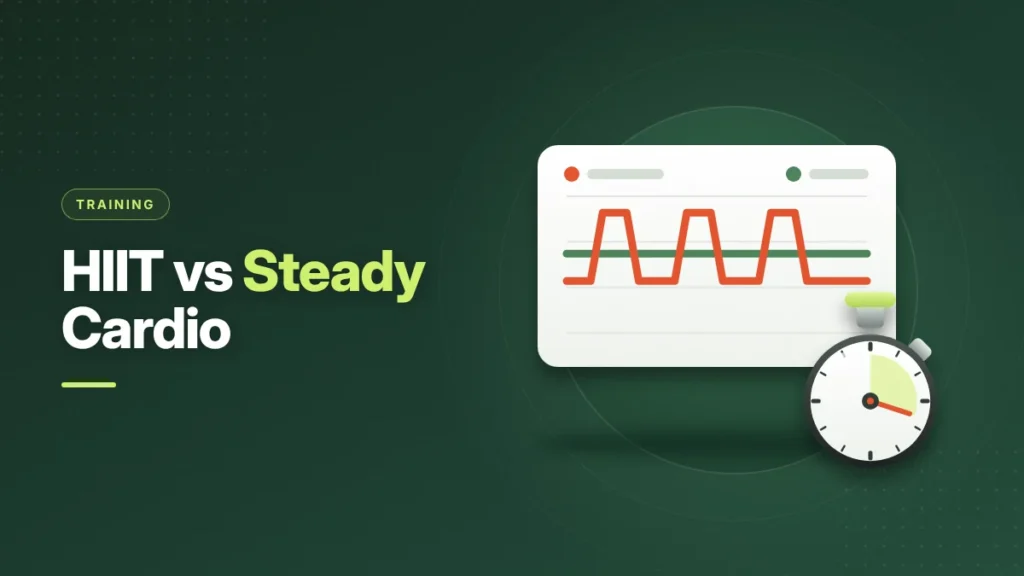
Walk into any gym and you’ll find two camps. One swears by short, sweaty interval sessions that leave you gasping. The other prefers long, steady runs, rides, or walks at a comfortable pace. Both claim theirs is the best way to get fit and lose fat. So when it comes to HIIT vs steady-state cardio, which one actually wins? The honest answer is that both work. The better choice depends on your goals, schedule, and fitness level.
What Is HIIT?
HIIT stands for high-intensity interval training. You alternate short bursts of very hard effort with periods of rest or easy movement. During the hard intervals, you’re working at around 80 to 95% of your maximum heart rate, which means you can’t talk in full sentences.
A simple example: 30 seconds of all-out cycling followed by 90 seconds of easy pedaling, repeated eight times. Including a warm-up and cool-down, that’s about 20 minutes.
What Is Steady-State Cardio?
Steady-state cardio means keeping a consistent, moderate effort for a longer period, usually 30 to 60 minutes. Think brisk walking, jogging, cycling, rowing, or swimming at a pace where you could still hold a conversation. It’s sometimes called LISS (low-intensity steady state) or moderate-intensity continuous training.
HIIT vs Steady-State Cardio: Head to Head
Fat Loss
This is the question most people care about. A 2019 meta-analysis comparing the two found that both reduced body fat percentage by similar amounts. Interval training did produce somewhat greater reductions in total fat mass, but the overall difference was modest.
In practice, the type of cardio matters less than doing it consistently and pairing it with a sensible diet. No amount of exercise can outrun a big calorie surplus.
Time Efficiency
HIIT clearly wins here. You can get a solid workout in 15 to 25 minutes. The CDC’s activity guidelines reflect this, recommending either 150 minutes of moderate activity or 75 minutes of vigorous activity each week. Put simply, one minute of hard effort counts roughly the same as two minutes of moderate effort.
Calories Burned
Per minute, HIIT burns more. Per session, steady-state can match or beat it simply because it lasts longer. A 40-minute jog may burn more calories than a 15-minute interval workout.
You may have heard of the “afterburn effect,” where your body keeps burning extra calories after hard exercise. It’s real, but small, often just a few dozen extra calories. It’s a nice bonus, not a game changer.
Fitness and Heart Health
Both improve cardiovascular health. HIIT tends to improve VO2 max, a key marker of aerobic fitness, slightly faster. Steady-state builds a strong aerobic base and endurance, which is important if you want to run longer distances or simply feel less tired during daily activities.
Recovery and Injury Risk
This is where steady-state shines. HIIT is demanding on your muscles, joints, and nervous system. Most people should limit it to two or three sessions a week. Steady-state cardio is gentle enough to do most days, and low-impact options like cycling or swimming are easy on the joints.
Quick Comparison
| HIIT | Steady-state | |
|---|---|---|
| Session length | 10–30 minutes | 30–60+ minutes |
| Intensity | Very hard | Moderate |
| Best for | Saving time, boosting fitness | Endurance, recovery, beginners |
| Recovery needed | More | Less |
| Sessions per week | 2–3 | Most days |
Which Should You Choose?
Choose HIIT if you’re short on time, already have a base level of fitness, and enjoy pushing hard.
Choose steady-state if you’re new to exercise, returning after a break, carrying joint pain, or want cardio that also feels relaxing.
Do both if you can. For many people, the best setup is one or two HIIT sessions plus two or three steady-state sessions a week, alongside strength training. That gives you the benefits of each without burning out.
Tips for Getting Started
- Build a base first. If you’re new, spend a few weeks doing steady-state before adding intervals.
- Pick low-impact HIIT. Bikes, rowers, and swimming are easier on your joints than sprinting or jumping.
- Warm up properly. Spend five minutes at an easy pace before any hard intervals.
- Don’t forget strength training. Lifting helps preserve muscle when you’re losing fat. Our guide on how to get a fast metabolism explains why that matters.
The Bottom Line
HIIT is fast, intense, and great for improving fitness when time is tight. Steady-state cardio is easier to recover from, more beginner-friendly, and excellent for building endurance. For fat loss, both work similarly when diet is in check. Pick the one you enjoy, or combine them, and focus on staying consistent. That’s what delivers results. For a broader plan, see our guide to balanced diet and regular exercise.
Written by Kashan | FitnessMethodology.com — Your trusted destination for practical fitness tips, smarter nutrition, and healthier living. We empower you to make smarter choices, build healthier habits, and achieving your fitness goals .
Health note: This article is general information, not medical advice. Check with a doctor or registered dietitian before making big changes to your diet or training, especially if you have a health condition, are pregnant or take medication. Read our full disclaimer.