We all know someone who eats anything and never gains a pound, so it’s natural to wonder how to get a fast metabolism of your own. The honest answer: you can’t flip a switch and double your calorie burn, but you can nudge it in the right direction. Building muscle, eating enough protein, moving more, sleeping well and skipping crash diets are what actually help.
What Your Metabolism Actually Does
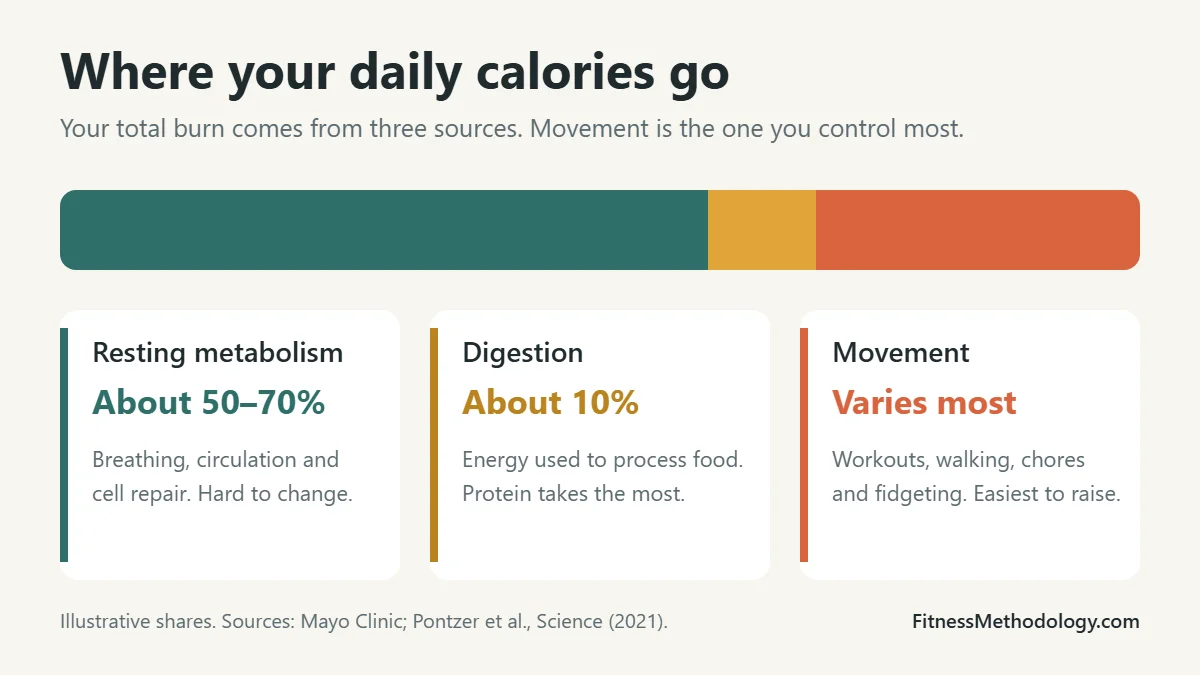
Metabolism is how your body turns food and drink into energy. Your daily calorie burn comes from three main sources:
- Resting metabolism: the energy that keeps you alive, like breathing, pumping blood and repairing cells. It’s the biggest share for most people.
- Digestion: about 10% of the calories you eat go toward digesting food.
- Movement: everything from workouts to walking to the kitchen.
As the Mayo Clinic notes, you can’t easily change your resting rate, but movement is up to you.
How to Get a Fast Metabolism: 5 Habits That Help
1. Build Muscle With Strength Training
Muscle burns more calories than fat, even at rest. The effect is modest, though; a few extra pounds won’t transform your metabolism. The bigger win is that lifting helps you keep the muscle we naturally lose with age, so you stay strong and active for decades.
The CDC recommends muscle-strengthening work at least two days a week for all major muscle groups. New to lifting? Our guide on how to gain muscle covers the basics.
2. Eat Enough Protein
Your body works harder to digest protein than carbs or fat. Research suggests about 20–30% of protein’s calories are used just processing it, versus 5–10% for carbs and 0–3% for fat. It also aids recovery and keeps you full.
Include protein at every meal: eggs, Greek yogurt, fish, chicken, beans, lentils or tofu. Eggs are an easy start; see how many calories are in an egg.
3. Move More Throughout the Day
Everyday movement like walking, cleaning, gardening and even fidgeting can burn about 100 to 800 calories a day, according to Mayo Clinic. Many people with a “fast metabolism” are simply more active.
Take walking calls, use the stairs and stand up hourly, then build toward at least 150 minutes of moderate activity, such as brisk walking, each week.
4. Prioritize Sleep
Sleep won’t boost your metabolism, but skimping on it hurts. In an NIH-funded study, people who slept five hours a night snacked more after dinner, gained about three pounds in two weeks and became less sensitive to insulin. Aim for at least seven hours.
5. Avoid Extreme Calorie Restriction
Eating far too little can backfire because your body adapts by burning less. In an NIH study of “The Biggest Loser” contestants, resting metabolism was still about 500 calories a day lower than expected six years later. A moderate deficit with strength training is safer. Check how many calories you should have to find your starting point.
Other Factors That Affect Your Metabolism
Hydration
Water supports nearly every process in your body, and swapping sugary drinks for it cuts empty calories. It just won’t dramatically speed things up.
Age
A large 2021 study found metabolism stays remarkably stable from about age 20 to 60, then declines slowly. Midlife weight gain is often more about moving less and losing muscle.
Individual Differences
Body size, sex, genetics and muscle mass all play a role, so two people of the same weight can burn different amounts. Uncommon conditions like an underactive thyroid can also slow things down, so talk to your doctor if you suspect a problem.
Common Metabolism Myths
According to MedlinePlus, these popular beliefs don’t hold up:
- “Certain foods burn fat.” Green tea, coffee and chili peppers may give a tiny bump, but not enough to change your weight.
- “Supplements speed up metabolism.” Most “fat burner” claims lack good evidence, and some products cause side effects.
- “Small, frequent meals stoke the fire.” Total intake matters more.
- “Workouts burn calories for days.” The afterburn usually fades within an hour or so.
Frequently Asked Questions
Can you speed up your metabolism overnight?
No. Changes come gradually from consistent habits.
What is the fastest way to boost metabolism?
There’s no shortcut. Strength training, enough protein, daily movement and good sleep work best together.
Why does my metabolism feel slow?
Usually it’s low activity, lost muscle, poor sleep or eating too little. See a doctor about fatigue or unexplained weight changes.
The Bottom Line
Learning how to get a fast metabolism is really about supporting the one you have. Lift weights, eat protein, move more, sleep well and fuel your body properly. Over months, these habits add up. For more, read our guide to a balanced diet and regular exercise.
Written by Kashan | FitnessMethodology.com — Your trusted destination for practical fitness tips, smarter nutrition, and healthier living. We empower you to make smarter choices, build healthier habits, and achieving your fitness goals .
Health note: This article is general information, not medical advice. Check with a doctor or registered dietitian before making big changes to your diet or training, especially if you have a health condition, are pregnant or take medication. Read our full disclaimer.