Eggs show up on almost every “healthy breakfast” list, and for good reason. They’re cheap, quick to cook and packed with protein. But if you track your food, you’ve probably asked yourself: how many calories are in an egg, really?
The short answer is about 72 calories for one large egg. The longer answer depends on the egg’s size, which part you eat and what goes into the pan with it.
How Many Calories Are in One Egg?
According to USDA FoodData Central, a raw whole egg contains about 143 calories per 100 grams. A large egg weighs roughly 50 grams without the shell, which works out to about 72 calories and just over 6 grams of protein.
Eggs aren’t made to an exact weight, though. Two “large” eggs from the same carton can differ by a few grams, so treat these numbers as averages, not exact counts for every egg.
Egg White vs. Egg Yolk Calories
The calories in an egg aren’t split evenly between the white and the yolk:
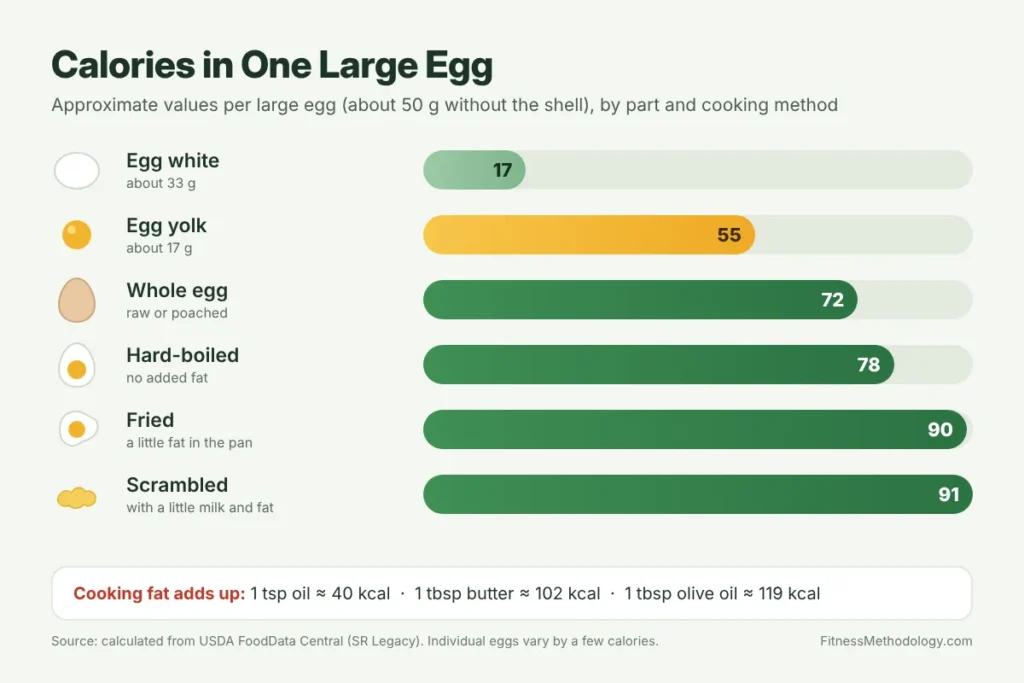
- Egg white (from a large egg, about 33 g): roughly 17 calories and 3.6 g of protein
- Egg yolk (from a large egg, about 17 g): roughly 55 calories and 2.7 g of protein
So the yolk carries about three-quarters of the calories and almost all of the fat. The white is mostly water and protein, which is why egg whites are popular with people on a tight calorie budget.
Egg Calories by Size
Size matters more than most people expect. Here’s how the numbers compare for raw whole eggs:
| Egg size | Approx. weight (no shell) | Approx. calories |
|---|---|---|
| Small | 38 g | 54 |
| Medium | 44 g | 63 |
| Large | 50 g | 72 |
| Extra-large | 56 g | 80 |
| Jumbo | 63 g | 90 |
When a recipe says “one egg,” it usually means a large egg. Swapping three large eggs for three extra-large ones adds about 24 calories, which is worth knowing if you track closely.
How Cooking Changes Egg Calories
Cooking an egg doesn’t add calories by itself. What you cook it in does.
Boiled and Poached Eggs
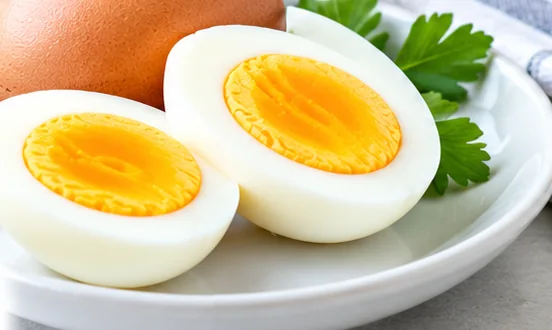
These are the leanest options because nothing is added. USDA lists a large hard-boiled egg at about 78 calories and a poached egg at about 72. The small gap reflects how the samples were measured, not the boiling.
Fried Eggs
A large fried egg comes in at about 90 calories in USDA’s data, which assumes a little fat in the pan. At home, it depends on your pour. One tablespoon of butter adds about 102 calories, and a tablespoon of olive oil adds about 119. If your egg soaks up even half of that, it can easily turn into a 120- to 130-calorie egg.
Scrambled Eggs and Omelets
USDA’s scrambled egg entry, which includes a little milk and fat, lands around 91 calories per large egg. Add cheese, cream or extra butter and the total climbs fast.
Quick tip: measure your oil with a teaspoon (about 40 calories) instead of pouring from the bottle, or use a non-stick pan.
Practical Tips for Eating Eggs on a Calorie Budget
- Mix whole eggs and whites. Two whole eggs plus two whites give you about 20 grams of protein for roughly 180 calories.
- Add fiber. Vegetables, beans or whole-grain toast keep you fuller. Our guide to building a balanced diet shows how to put plates like this together.
- Count the extras. Butter, cheese and toast often add more calories than the eggs.
- Use eggs to hit your protein target. At about 6 grams of protein each, eggs help if you’re working on gaining muscle.
Frequently Asked Questions
How many calories are in 2 eggs?
Two large eggs contain roughly 145 to 155 calories when boiled or poached. if you cook them with butter or oil the calorie count can go over 200, depending upon how much you use.
Are egg whites healthier than whole eggs?
Not necessarily. Egg whites are lower in calories, but the yolk holds most of the vitamins and healthy fats. For most people, whole eggs fit well into a balanced diet.
Is it okay to eat eggs every day?
For most healthy adults, eggs can be part of a varied diet. However, Harvard Health notes that people with high cholesterol, diabetes or heart disease may need to limit them, so check with your doctor or a registered dietitian.
The Bottom Line
A large egg has about 72 calories, with roughly 17 in the white and 55 in the yolk. Size moves that number from about 54 to 90, and cooking fat can add more than the egg itself. Boil or poach for the leanest option, and measure your butter or oil when you fry. For quick numbers on other everyday foods, take a look at our calorie guide.
Health note: This article is general information, not medical advice. Check with a doctor or registered dietitian before making big changes to your diet or training, especially if you have a health condition, are pregnant or take medication. Read our full disclaimer.