If you’ve ever stood in a gym asking yourself, “How do you gain muscle?” you’re not alone. Social media makes it look complicated, but muscle growth comes from a few basics done well, week after week: challenging your muscles, eating enough and giving your body time to recover.
How Muscle Growth Works
Challenging your muscles gives your body a reason to adapt. After a workout, your body builds new muscle proteins, a process called muscle protein synthesis. According to the International Society of Sports Nutrition (ISSN), resistance exercise and protein intake both stimulate this process, and they work best together.
When training, food and rest line up, your muscle fibers gradually grow. This is called hypertrophy. For a realistic sense of what to expect, see our guide on how long it takes to build muscle.
Start With Strength Training
Strength training (resistance training) is the main signal for muscle growth. Free weights, machines, bands and body weight moves like push-ups all count. If you are just starting out, here is why beginners get stronger so quickly.
The Physical Activity Guidelines for Americans recommend muscle-strengthening activity at least two days a week. For beginners, the American College of Sports Medicine (ACSM) suggests training the whole body two to three days per week, using one to three sets of 8–12 repetitions per exercise.
Choose a Few Key Exercises
Focus on moves that work several muscles at once:
- Squats or leg presses
- Hip hinges, such as Romanian dead-lifts or glute bridges
- Push-ups or chest presses
- Rows or lat pull downs
- Overhead presses
Learn each movement with a lighter weight first so you can add load safely later.
Use Progressive Overload
Muscles adapt to what you regularly ask of them, so the challenge needs to increase gradually. This is called progressive overload.
You can add weight, reps or sets. The ACSM suggests that once you can do one or two reps more than your target in two consecutive workouts, increasing the load by about 2–10% is a reasonable next step. A workout log makes this easy to track.
Eat Enough Protein and Total Food
Protein Intake
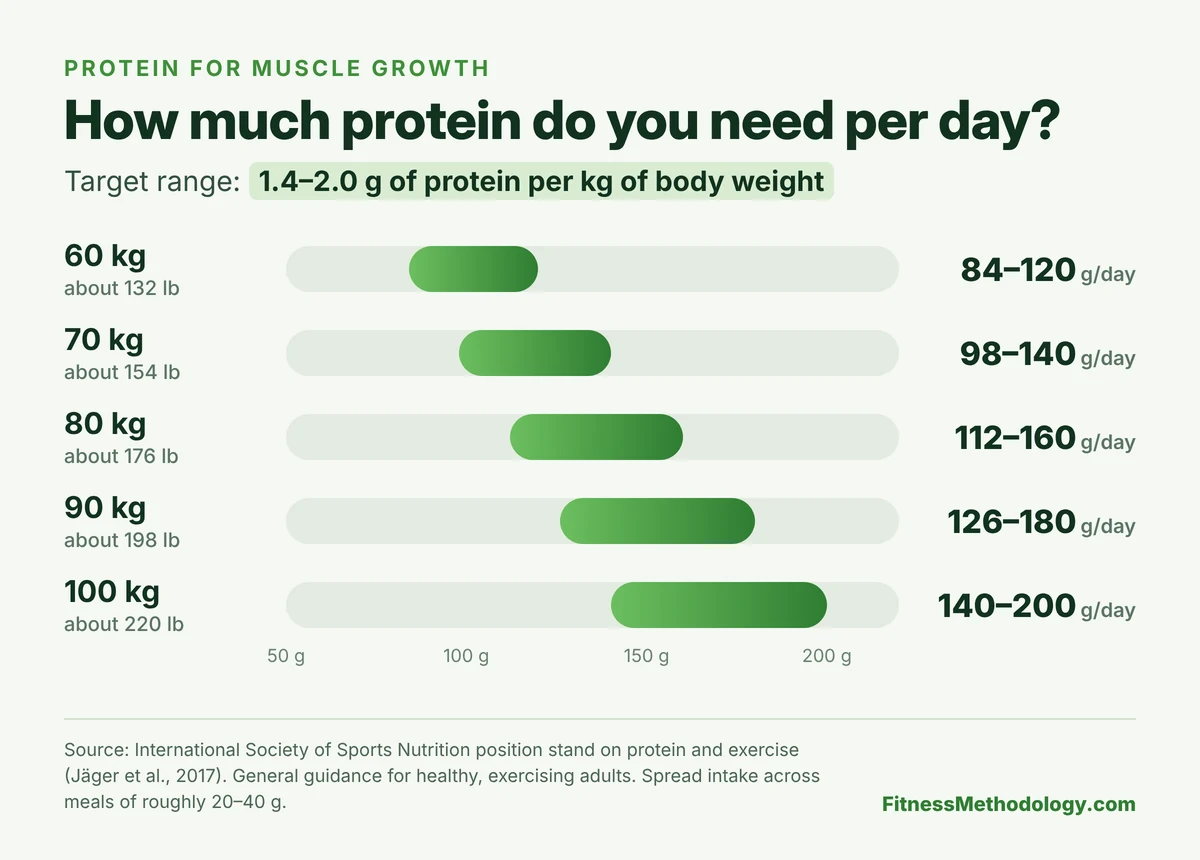
Protein supplies the building blocks for muscle. The ISSN states that 1.4–2.0 grams of protein per kilogram of body weight per day is sufficient for most exercising people who want to build muscle. For a 70 kg (about 154 lb) person, that works out to roughly 98–140 grams a day. The ISSN also suggests spreading it across the day in servings of about 20–40 grams.
Eggs, chicken, fish, Greek yogurt, tofu, lentils and beans are good sources. Eating plant-based? Here are some vegan alternatives to fish that still deliver protein. If you have kidney disease or another medical condition, talk to your doctor before significantly increasing protein.
Balanced Nutrition
Protein can’t do the job alone. You also need enough total calories to build new tissue, carbohydrates to fuel training, and healthy fats, fruits and vegetables. Our guide to a balanced diet explains how to build well-rounded meals.
Prioritize Recovery and Sleep
Muscles are rebuilt during rest, not during the workout. With a full-body routine, leave a day between sessions; Monday, Wednesday and Friday works well for many beginners.
Sleep matters too. The CDC recommends that adults aged 18–60 get seven or more hours of sleep per night. Short sleep can leave you too tired to train well.
Stay Consistent
Consistency matters more than intensity. Three solid workouts a week for months will do far more than an all-out two-week burst. According to the ACSM, early strength gains come mainly from your nervous system adapting to training, so don’t worry if your log improves faster than the mirror.
Practical Tips for Beginners
- Schedule two or three strength sessions a week.
- Record every exercise, weight and rep count.
- Include a protein source at each meal.
- Keep a regular bedtime to protect your sleep.
- Warm up with a few lighter sets.
- Ask a qualified trainer to check your form if unsure.
Frequently Asked Questions
Can I gain muscle without going to the gym?
Yes. Body weight exercises and bands can build muscle if you keep making them harder. Water also provides resistance; here’s what the science says about swimming and muscle.
Do I need supplements to build muscle?
No. Most people can meet their protein needs with regular food; powders are just convenient.
Should I still do cardio?
Yes. Cardio supports heart health. Just don’t let it leave you too tired to lift well.
How Do You Gain Muscle? The Bottom Line
Lift with good form, make your workouts gradually harder, eat enough protein and overall food, sleep well and repeat it consistently. Start simple, track your progress and give your body time.
This article is for general information, not medical advice. If you have a health condition or injury, check with a healthcare professional before starting a new program.
Health note: This article is general information, not medical advice. Check with a doctor or registered dietitian before making big changes to your diet or training, especially if you have a health condition, are pregnant or take medication. Read our full disclaimer.