Pizza is one of the world’s favorite foods, but if you are watching your calorie intake, you may wonder how many calories you are actually eating. A typical slice of cheese pizza contains approximately 230–300 calories, while pepperoni pizza often contains around 250–320 calories. However, the exact number depends on the slice size, crust thickness, cheese, and toppings.
Pizza can fit into a balanced diet, whether your goal is to lose weight, maintain your current weight, or build muscle. Understanding pizza calories and portion sizes can help you make informed food choices without giving up your favorite foods.
In this guide, you will discover the estimated calories in different types of pizza, the factors that affect their nutritional value, and practical ways to enjoy pizza while working toward your fitness goals.
.
How Many Calories Are in Different Types of Pizza?
The calories in a slice of pizza can vary considerably depending on its ingredients and serving size. A thin-crust cheese pizza may contain fewer calories than a thick-crust pizza topped with extra cheese and processed meat.
The following table provides general estimates for common pizza varieties.
| Type of pizza | Estimated calories per slice |
|---|---|
| Cheese pizza | 230–300 |
| Pepperoni pizza | 250–320 |
| Vegetable pizza | 220–290 |
| Thin-crust cheese pizza | 180–250 |
| Margherita pizza | 220–300 |
| Meat lovers’ pizza | 300–450 |
| Deep-dish pizza | 350–500+ |
| Extra-cheese pizza | 300–400+ |
These figures are approximate estimates, not verified values for every restaurant or brand. Slice weight, pizza diameter, ingredients, and preparation methods can significantly affect the actual calorie count.
For the most accurate information, check the restaurant’s nutrition guide or the nutrition label on packaged pizza. The USDA FoodData Central database is another useful resource for researching the nutritional composition of foods.
Calories in a Slice of Cheese Pizza
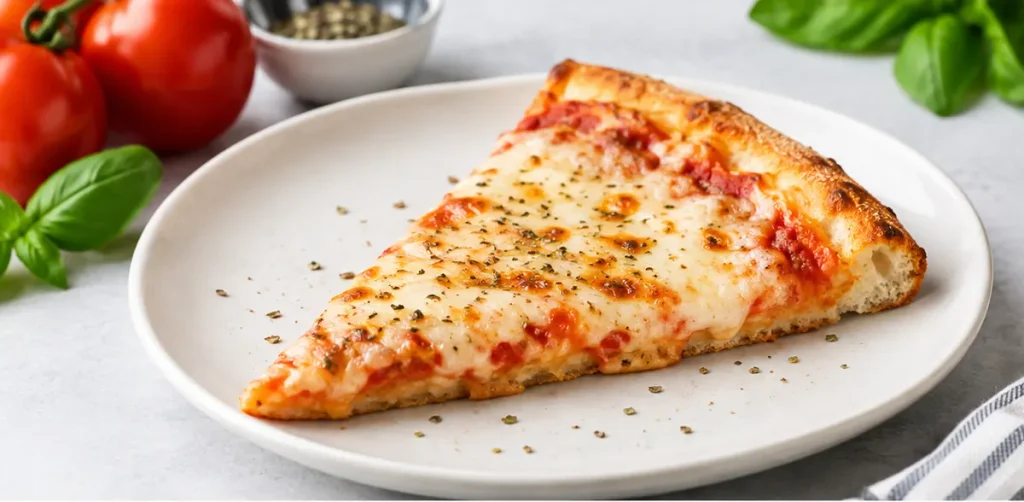
Cheese pizza is a common starting point when estimating pizza calories. A standard slice may contain approximately 230–300 calories, depending on its size and thickness.
Three ingredients contribute most of the calories:
- Crust: Provides carbohydrates and energy.
- Cheese: Supplies protein, fat, and calcium.
- Tomato sauce: Adds flavor and small amounts of nutrients.
A small slice from a medium pizza may contain fewer calories than a large restaurant slice. Therefore, consider the portion size rather than assuming every slice contains the same number of calories.
Calories in a Slice of Pepperoni Pizza
Pepperoni pizza often contains more calories than a similar-sized plain cheese pizza because pepperoni adds fat and energy.
A typical slice may contain around 250–320 calories, although large slices can contain considerably more. Extra cheese, additional pepperoni, and oil-rich crusts can increase the total.
If pepperoni pizza is your favorite, you can still enjoy it as part of a balanced diet. Pay attention to the serving size and consider pairing it with a vegetable side dish.
Calories in Thin-Crust Pizza
Thin-crust pizza often contains fewer calories per slice than a comparable thick-crust pizza because it generally uses less dough.
A slice of thin-crust cheese pizza may contain approximately 180–250 calories, depending on its size and toppings.
However, thin crust does not automatically mean low calorie. Generous cheese portions, oily sauces, and meat toppings can still increase the calorie content.
Calories in Deep-Dish Pizza
Deep-dish pizza typically has a thick crust and substantial layers of cheese, sauce, and toppings.
A slice may contain approximately 350–500 calories or more, especially when the portion is large or the recipe includes extra cheese and meat.
Because deep-dish slices can be heavier than standard slices, comparing pizzas by weight or using restaurant nutrition information can provide a more meaningful estimate.
Calories in Vegetable Pizza
Vegetable pizza topped with mushrooms, onions, bell peppers, spinach, and tomatoes can be a satisfying choice.
A typical slice may contain approximately 220–290 calories, depending on the crust, cheese, oil, and portion size.
Vegetable toppings can contribute fiber, vitamins, and minerals. However, the overall nutritional value still depends on the complete recipe.
What Factors Affect the Calories in Pizza?
Several factors determine how many calories are in a slice of pizza. Understanding them can help you estimate your intake more accurately.
1. Slice Size
Slice size is one of the most important factors affecting calorie content.
A small slice may contain around 200–250 calories, while a large restaurant slice can contain 350 calories or more. Even two slices from the same pizza may differ slightly in size.
When comparing calorie counts, check the serving weight and the number of servings listed on the nutrition label.
2. Crust Thickness
The crust contributes carbohydrates and energy to pizza.
Thin crusts generally contain less dough per slice than thick or stuffed crusts. Stuffed crusts may also contain additional cheese, increasing their calorie content.
If you prefer a lighter option, consider a thinner crust with moderate toppings.
3. Cheese and Meat Toppings
Cheese, pepperoni, sausage, bacon, and other meat toppings can increase calories because they contribute fat and protein.
Extra cheese may make a pizza more filling, but it can also raise the calorie count. Creamy sauces and added oils can have a similar effect.
You do not need to avoid these ingredients completely. Instead, choose portions that suit your preferences and nutritional goals.
4. Vegetable Toppings and Sauces
Vegetables such as mushrooms, onions, tomatoes, and peppers generally contribute fewer calories than many fatty meat toppings.
However, vegetables do not guarantee that a pizza is low in calories. Large amounts of cheese, oil, or creamy sauces can still make the meal energy-dense.
5. Homemade Versus Restaurant Pizza
Homemade, frozen, takeaway, and restaurant pizzas can have different nutritional profiles.
When making pizza at home, you can control the amount of dough, cheese, oil, sauce, and toppings. Restaurant portions may be larger, and recipes can vary considerably.
Neither option is automatically lower in calories. Compare the actual ingredients and serving sizes whenever possible.
What Are the Nutritional Benefits of Pizza?
Pizza is often treated as an occasional indulgence, but it can also provide useful nutrients. Its nutritional value depends on the ingredients, portion size, and how it fits into your overall diet.
Protein for Muscle Maintenance
Cheese and meat toppings provide protein, which helps the body maintain and repair muscle tissue.
If you exercise regularly, including protein-rich foods throughout the day can help support your training and recovery. Pizza can contribute to your protein intake, although the amount varies by recipe.
For more information about resistance training and muscle development, read our guide on how long it takes to build muscle.
Carbohydrates for Energy
Pizza crust supplies carbohydrates, which the body uses as an important source of energy.
The amount depends on the crust size, recipe, and serving weight. Whole-grain ingredients, when used, can also contribute dietary fiber.
Calcium for Bone Health
Cheese provides calcium, a mineral that supports normal bone health and other bodily functions.
The amount of calcium in pizza depends on the type and quantity of cheese used.
Vitamins and Minerals
Tomato sauce and vegetable toppings can provide nutrients such as vitamin C, potassium, and other vitamins and minerals.
Adding a variety of vegetables to your meals can help increase the range of nutrients you consume throughout the day.
Consider Sodium and Saturated Fat
Some pizzas contain substantial amounts of sodium and saturated fat, particularly varieties with extra cheese and processed meats.
If you eat pizza regularly, consider balancing it with other nutrient-rich foods and checking nutrition labels when available.
For general guidance on balanced eating, see the NHS Eat well Guide.
How to Enjoy Pizza While Managing Your Calories
You do not need to eliminate pizza to maintain a balanced diet. A flexible approach can help you enjoy your favorite foods while working toward your health and fitness goals.
1. Pay Attention to Portion Sizes
Start by checking the calories in one slice and the serving size used for that estimate.
If a restaurant serves unusually large slices, remember that one slice may contain substantially more calories than a standard serving.
2. Add Vegetables to Your Meal
Pair pizza with a salad, steamed vegetables, or another vegetable-rich side dish.
This can add variety, fiber, and nutrients to your meal without requiring you to give up the pizza you enjoy.
3. Choose Toppings Thoughtfully
Extra cheese, processed meats, creamy dips, and oil-based sauces can increase the calorie content.
Consider which toppings you enjoy most and choose combinations that suit your preferences.
4. Check Nutrition Information
Many restaurant chains and packaged pizza brands publish nutrition information.
Use these details when available instead of relying exclusively on general calorie estimates. Pay attention to the serving size, because the listed calories may apply to a smaller portion than the one you eat.
5. Consider Your Overall Eating Pattern
Your long-term eating habits matter more than whether you eat pizza on a particular day.
If your goal is weight management, your overall energy intake and expenditure influence changes in body weight over time. If you are trying to build muscle, adequate energy and protein can help support training.
Focus on sustainable habits rather than feeling that you must compensate for every food choice.
How Many Calories Are in Two, Three, or Four Slices of Pizza?
If you are tracking your calorie intake, calculating the total number of calories in multiple slices can make planning easier.
For example, if each slice contains approximately 280 calories, the totals would be:
| Number of slices | Example calorie total |
|---|---|
| 1 slice | 280 calories |
| 2 slices | 560 calories |
| 3 slices | 840 calories |
| 4 slices | 1,120 calories |
These figures are mathematical examples based on 280 calories per slice. Your actual intake may be lower or higher depending on the pizza.
For example, two slices containing 200 calories each would provide 400 calories. Two larger slices containing 400 calories each would provide 800 calories.
The best way to estimate your intake is to use the actual nutrition information for the pizza you are eating.
Common Myths About Pizza Calories
Misunderstandings about food can make healthy eating unnecessarily complicated. Here are some common pizza myths worth correcting.
Myth 1: Every Slice of Pizza Contains the Same Calories
This is incorrect. Slice weight, crust, cheese, toppings, and preparation methods all affect calorie content.
Myth 2: Thin-Crust Pizza Is Always Low in Calories
Thin crust often contains less dough, but extra cheese, oil, and toppings can increase the total calories substantially.
Myth 3: Vegetable Pizza Is Always the Healthiest Option
Vegetable toppings can contribute useful nutrients, but the entire recipe matters. A vegetable pizza with large amounts of cheese and oil may contain more calories than expected.
Myth 4: Eating Pizza Ruins a Weight-Loss Plan
One meal does not automatically determine your long-term progress. Your overall eating pattern, activity level, and consistency matter much more.
Myth 5: Homemade Pizza Always Contains Fewer Calories
Homemade pizza gives you more control over ingredients, but generous portions of dough, cheese, and oil can still make it high in calories.
Frequently Asked Questions
1. How many calories are in a normal slice of pizza?
A typical slice of cheese pizza contains approximately 230–300 calories. Pepperoni pizza often contains around 250–320 calories, although larger portions can contain more.
2. How many calories are in one slice of pepperoni pizza?
A standard slice of pepperoni pizza may contain approximately 250–320 calories. The actual number depends on its size, crust, cheese, and toppings.
3. Is thin-crust pizza lower in calories?
Often, yes. Thin-crust pizza generally contains less dough per slice than thick-crust pizza. However, toppings and added oil can significantly affect the final calorie count.
4. How many calories are in two slices of pizza?
Two standard cheese pizza slices may contain approximately 460–600 calories. Larger or richer slices can contain more.
5. Can I eat pizza while trying to lose weight?
Yes. Pizza can fit into a weight-management plan when your overall eating pattern supports your goals. Portion awareness and a varied, balanced diet can help.
6. Which pizza has the fewest calories?
A smaller thin-crust pizza with moderate cheese and vegetable toppings is often a lower-calorie option. Compare actual serving sizes and nutrition information to make a more accurate choice.
7. Does homemade pizza have fewer calories than restaurant pizza?
It can, because you control the ingredients and portion sizes. However, homemade pizza is not automatically lower in calories.
8. How can I calculate pizza calories accurately?
Check the nutrition label or restaurant nutrition guide. If this information is unavailable, use general estimates based on slice size, crust, cheese, and toppings.
Final Thoughts
Knowing how many calories are in a slice of pizza can help you make more informed food choices without giving up one of your favorite meals.
A typical slice of cheese pizza contains approximately 230–300 calories, while pepperoni, deep-dish, and extra-cheese varieties may contain more. Slice size, crust thickness, toppings, and preparation methods all influence the final calorie count.
The most practical approach is to check nutrition information when available, choose portions that suit your needs, and include a variety of nutritious foods in your diet.
You can enjoy pizza and work toward your fitness goals at the same time. Focus on balanced eating habits, consistency, and realistic expectations rather than perfection.
Keep Reading
- Balanced Diet and Regular Exercise: A Simple Guide to Better Health
- How Long Does It Take to Build Muscle? A Realistic Timeline
- Building a Sustainable Approach to Health and Fitness
- Free Calorie Calculator: estimate your daily calorie needs
Health note: This article is general information, not medical advice. Check with a doctor or registered dietitian before making big changes to your diet or training, especially if you have a health condition, are pregnant or take medication. Read our full disclaimer.