If you’re thinking about going plant-based, one question comes up fast: can vegans eat eggs? The short answer is no. Eggs come from animals, so they’re off the menu on a traditional vegan diet. The good news? Vegans have plenty of easy swaps, and most are already in your kitchen.
Here’s why, and what vegans eat instead.
Why Don’t Vegans Eat Eggs?
The Vegan Society, the group that coined the word in 1944, defines veganism as a way of living that avoids exploiting animals for food, clothing, or any other purpose, as far as is practical. On the plate, that means no meat, diary, honey, fish, or egg.
The ethical reasons
For most vegans, the issue is how eggs are produced. Commercial laying hens are bred to lay far more eggs than their wild ancestors, and many spend their lives in crowded housing. Hatcheries also have little use for male chicks, since they don’t lay eggs. Even with “free-range” labels, the hen is still being used for food.
Health and environmental reasons
Others go vegan mainly for their health or the planet, preferring a diet built around beans, grains, nuts, and vegetables. You’ll occasionally meet plant-based eaters who eat eggs from backyard hens, but by definition, that isn’t vegan.
Vegan vs. Vegetarian: What’s the Difference?
This is where a lot of the confusion comes from. Vegetarians don’t eat meat, poultry, or fish, but many still eat animal by-products. A lacto-ovo vegetarian, for example, eats both dairy and eggs. Vegans skip all animal products completely.
So a vegetarian eating an omelet isn’t breaking any rules. The same logic applies to seafood, covered in can I eat fish on a vegan diet?
What Do Vegans Eat Instead of Eggs?
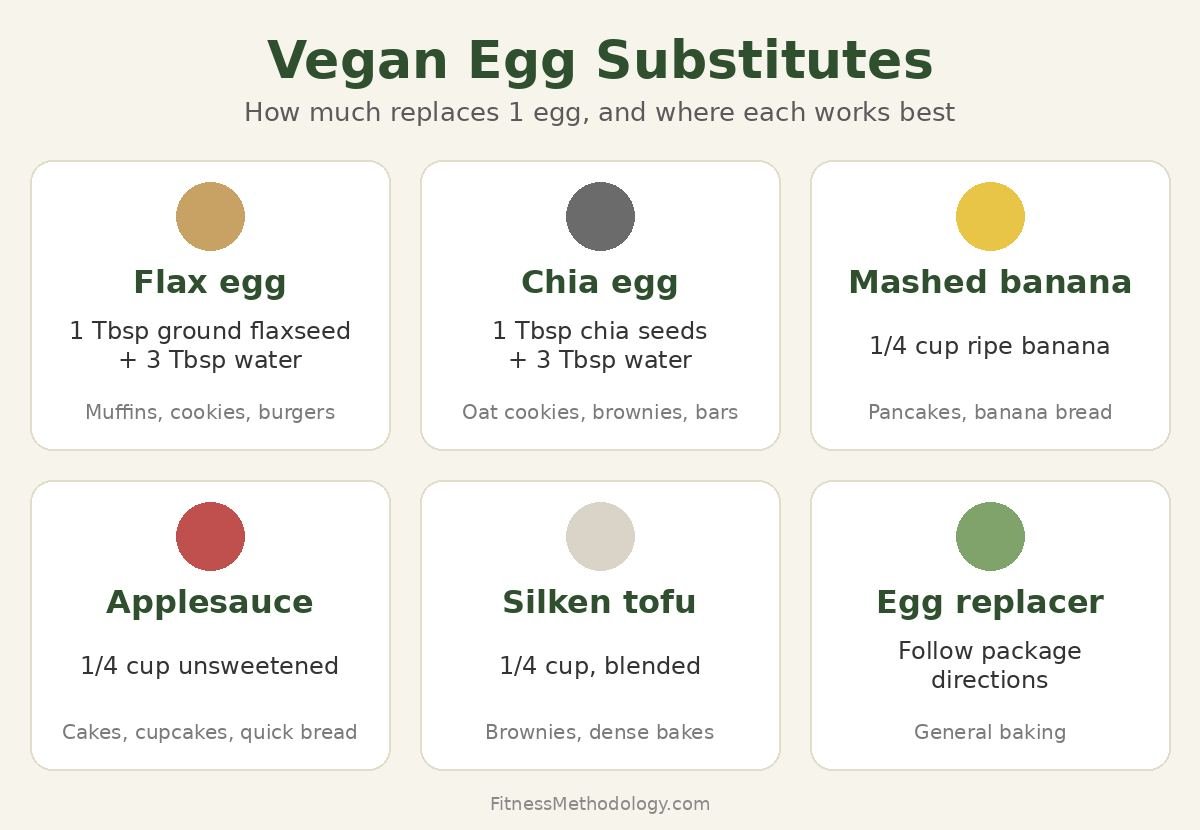
Eggs do several jobs: they bind, add moisture, help bakes rise, and make a protein-rich breakfast. The right swap depends on the job. The ratios below follow guidance from the University of Illinois Extension.
Flax eggs
Mix 1 tablespoon of ground flaxseed with 3 tablespoons of water, then let it sit for about five minutes until it turns gel-like. That equals one egg. Flax eggs are great in muffins, pancakes, cookies, and veggie burgers.
Chia eggs
Chia works the same way: 1 tablespoon of chia seeds plus 3 tablespoons of water. Use it in oatmeal cookies, brownies, or energy bars. Like flax, chia adds a little fiber, a nice bonus if you’re aiming for more high-fiber foods in your day.
Mashed banana
About ¼ cup of mashed ripe banana replaces one egg. It’s perfect in banana bread (obviously), pancakes, and brownies. Expect a sweeter, banana-flavored result.
Applesauce
Unsweetened applesauce works at the same ¼-cup ratio. It keeps cakes, cupcakes, and quick breads moist with a more neutral flavor than banana.
Tofu
For savory dishes, crumble firm tofu into a hot pan with a pinch of turmeric for color. This tofu scramble feels a lot like scrambled eggs. For baking, ¼ cup of blended silken tofu replaces one egg in dense bakes like brownies or cheesecake-style desserts.
Commercial egg replacers
Store-bought egg replacers are usually made from starches like potato or tapioca, and some liquid versions use plant proteins like mung bean. Follow the package directions, since ratios vary by brand.
Do Vegans Miss Out on Nutrients From Eggs?
Eggs are a convenient source of protein and vitamin B12. (If you’re curious about the numbers, see how many calories are in an egg.) Vegans can get plenty of protein from tofu, tempeh, lentils, beans, and seeds.
Vitamin B12 is the one to watch. According to the NIH Office of Dietary Supplements, plant foods don’t contain B12 unless they’re fortified, so vegans should rely on fortified foods, like some cereals and nutritional yeast, or a supplement. The Academy of Nutrition and Dietetics says appropriately planned vegan diets can be nutritionally adequate for adults and may offer long-term health benefits. The key word is “planned,” and a balanced diet makes that much easier.
FAQs
Are free-range or backyard eggs vegan?
No. Any egg comes from an animal, so it isn’t considered vegan, no matter how the hen was raised.
Can vegetarians eat eggs?
Many can. Lacto-ovo and ovo vegetarians eat eggs, while lacto vegetarians and vegans don’t.
What’s the best egg substitute for baking?
It depends on the recipe. Flax or chia eggs are great for binding, while banana, applesauce, or silken tofu work best for adding moisture.
The Bottom Line
So, can vegans eat eggs? No. Eggs are an animal product, and veganism avoids those for ethical, health, and environmental reasons. Swapping them out is easy, though. Try a flax egg in your next batch of muffins or a tofu scramble for breakfast. You might not miss the real thing at all.
Written by Kashan | FitnessMethodology.com — Your trusted destination for practical fitness tips, smarter nutrition, and healthier living. We empower you to make smarter choices, build healthier habits, and achieving your fitness goals .
Health note: This article is general information, not medical advice. Check with a doctor or registered dietitian before making big changes to your diet or training, especially if you have a health condition, are pregnant or take medication. Read our full disclaimer.