If one leg always seems to do more of the work, the Bulgarian split squat deserves a spot in your routine. It has a reputation for being tough, but most of the struggle comes from a shaky setup, not weak legs. Once you know how to do a Bulgarian split squat with the right foot position, it becomes one of the most useful leg moves you can learn.
What Is a Bulgarian Split Squat?
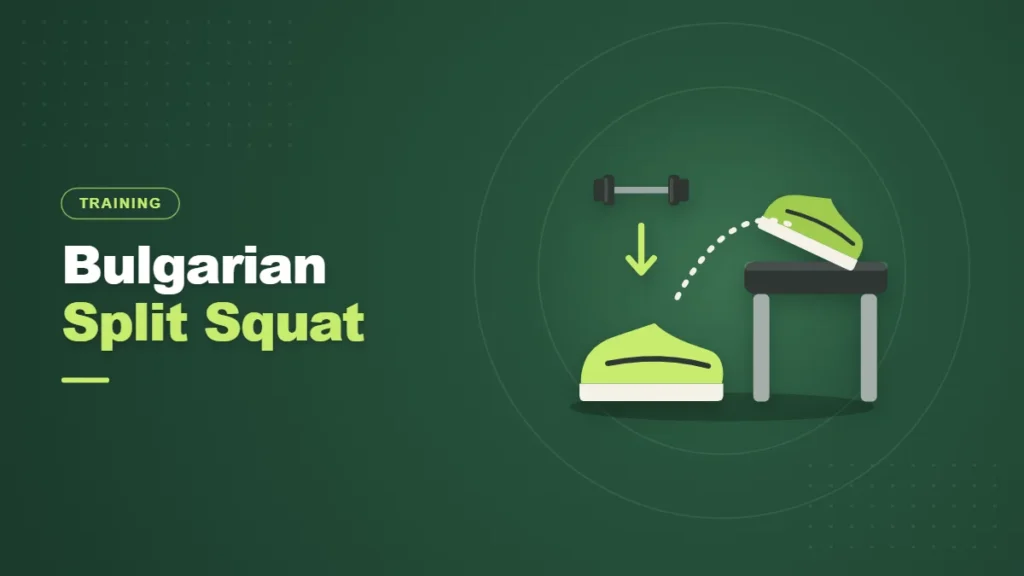
It’s a split squat with your back foot resting on a bench behind you. Raising the rear foot shifts more of your weight onto the front leg, so each side works on its own. You may also see it called a rear-foot-elevated split squat. It could also be considered a variation of a single leg squat.
Benefits of the Bulgarian Split Squat
- Builds single-leg strength. Each leg works independently, which can reveal and help even out side-to-side differences.
- Improves balance and control. Your hips and core work hard to keep you steady.
- Needs minimal equipment. A bench and your body weight are enough.
- Keeps heavy weight off your back. Dumbbells at your sides can feel more comfortable than a barbell on your shoulders.
Muscles Worked
According to the NASM exercise library, the main movers are the quadriceps and glutes of your front leg. Your hamstrings, inner thighs, hip stabilizers, and core also help keep you balanced.
Equipment You’ll Need
You need a sturdy bench, box, or step about knee height or a little lower. A chair can work if you push it against a wall so it can’t slide. Dumbbells are optional and come later.
How to Do a Bulgarian Split Squat Step by Step
- Set up. Stand about one long stride in front of the bench, facing away.
- Place your back foot. Rest the top of one foot (laces down) on the bench. Keep most of your weight on your front foot.
- Brace. Tighten your core, lift your chest, and keep hands on your hips.
- Lower slowly. Bend your front knee and hip until your front thigh is roughly parallel to the floor, or as low as you can control.
- Drive up. Push through your whole front foot to stand back up.
- Switch sides. Finish all reps on one leg before changing.
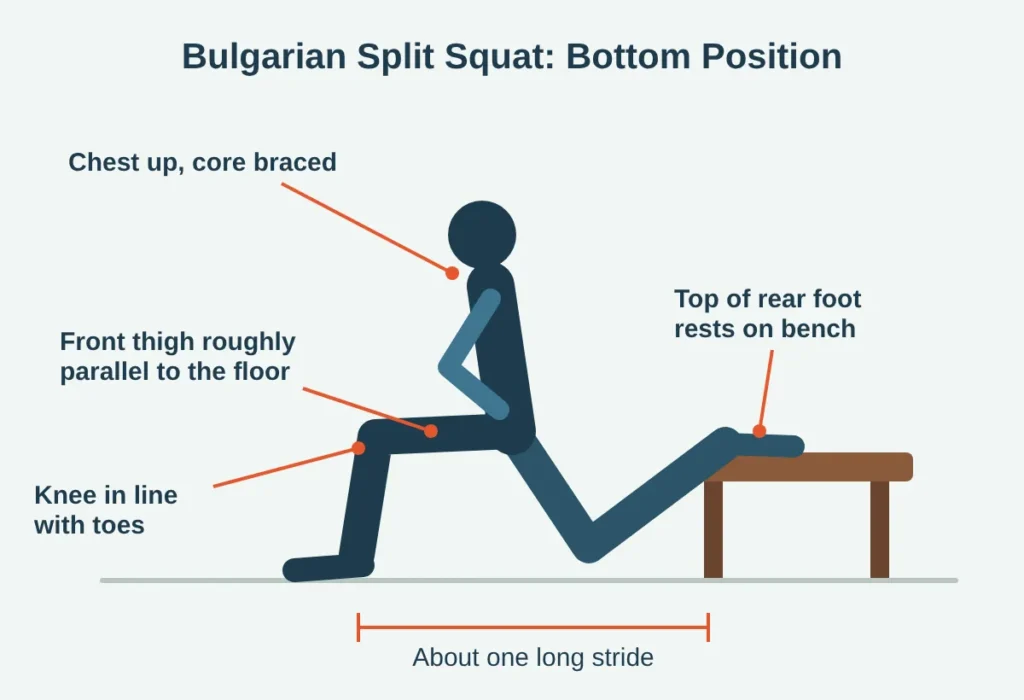
Getting Your Foot Placement Right
Foot placement makes or breaks the Bulgarian split squat. Too close to the bench and your front heel lifts; too far and you’ll feel overstretched and wobbly. Keep your feet roughly hip-width apart, like standing on train tracks rather than a tightrope. Adjust until your heel stays planted and your knee tracks over your toes.
Sets and Reps for Beginners
A sensible start is 2 to 3 sets of 8 to 10 reps per leg using body weight, resting about a minute between sets. Once 12 smooth reps feel easy, add light dumbbells. This gradual progressive overload is what keeps you improving.
Aim for two sessions a week. The American College of Sports Medicine’s updated guidelines recommend training all major muscle groups at least twice weekly, and body-weight training counts. Quick early progress is normal, since much of it comes from your nervous system learning the movement.
Common Mistakes to Avoid
- Pushing off the back foot. Your rear leg is just for balance.
- Letting the front knee cave in. Keep it in line with your toes.
- Folding forward too much. A slight lean is fine, but collapsing strains your lower back.
- Rushing. Take two or three seconds on the way down.
- Going heavy too soon. Weight you can’t control ruins your form.
Beginner Modifications
Too hard? Try these first:
- Do a regular split squat with both feet on the floor.
- Use a lower step instead of a full bench.
- Hold a wall or rail for balance.
- Go only halfway down until you feel steady.
Muscle burn is normal, but stop if you feel sharp pain. If you have a knee, hip, or back injury, check with a doctor or physical therapist first.
Frequently Asked Questions
Is the Bulgarian split squat good for beginners?
Yes, if you start with body weight and a manageable bench height. Try the regular split squat first if balance feels tricky.
How high should the bench be?
Knee height or slightly lower suits most people. Go lower if your back thigh feels overstretched.
Does my back knee need to touch the floor?
No. Lower only as far as you can control.
The Bottom Line
Learning how to do a Bulgarian split squat comes down to a stable setup, slow reps, and patience. Start with body weight, find your foot position, and add load only when your form stays solid. For realistic expectations, see our guide on how long it takes to build muscle.
Health note: This article is general information, not medical advice. Check with a doctor or registered dietitian before making big changes to your diet or training, especially if you have a health condition, are pregnant or take medication. Read our full disclaimer.