If you’re asking “how many calories should I have?”, here’s the quick answer: most adults need roughly 1,600 to 3,000 calories a day to maintain their weight. Women usually land around 1,600 to 2,400, and men around 2,000 to 3,000, based on estimates from the Dietary Guidelines for Americans.
Your exact number depends on how you live and who you are, so let’s narrow it down.
What Decides How Many Calories You Need?
Your body burns calories all day, even while you sleep. Four main factors shape your total.
Age
Needs usually drop as you get older. Many people lose some muscle and move less with age, so a 60-year-old often needs fewer calories than they did at 25.
Sex
Men generally need more calories than women, mostly because they tend to be taller, heavier and more muscular.
Body Size
A bigger body takes more energy to run. The government estimates assume a reference woman who is 5’4″ and 126 pounds and a reference man who is 5’10” and 154 pounds. Taller or heavier? Your needs are probably higher.
Activity Level
This is the factor you control most. Two people of the same age and size can differ by hundreds of calories if one sits all day and the other walks several miles.
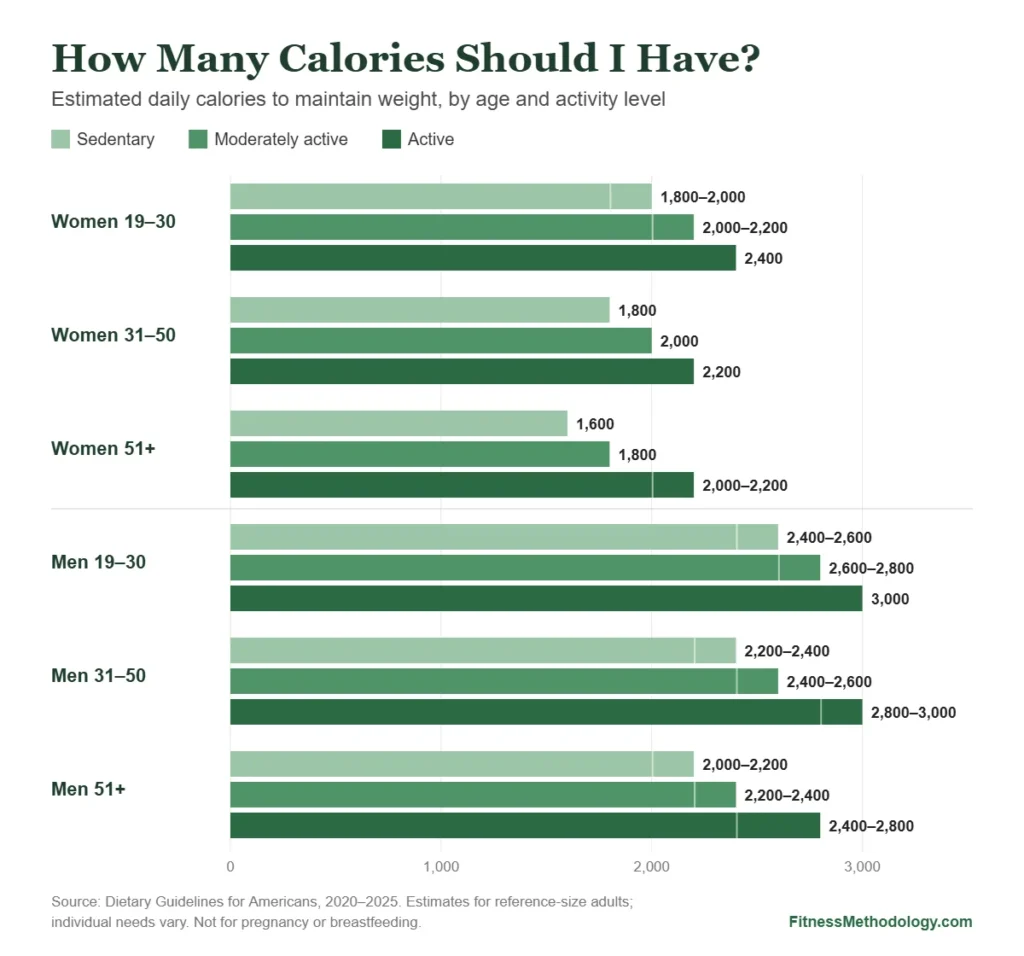
Daily Calorie Needs for Adults (Estimates)
Here are estimated calories per day to maintain weight. “Sedentary” means only light daily activity, “moderately active” adds about 1.5 to 3 miles of walking a day, and “active” means more than 3 miles.
| Adults | Sedentary | Moderate | Active |
|---|---|---|---|
| Women 19–30 | 1,800–2,000 | 2,000–2,200 | 2,400 |
| Women 31–50 | 1,800 | 2,000 | 2,200 |
| Women 51+ | 1,600 | 1,800 | 2,000–2,200 |
| Men 19–30 | 2,400–2,600 | 2,600–2,800 | 3,000 |
| Men 31–50 | 2,200–2,400 | 2,400–2,600 | 2,800–3,000 |
| Men 51+ | 2,000–2,200 | 2,200–2,400 | 2,400–2,800 |
Source: Dietary Guidelines for Americans, 2020–2025. Estimates only; not for pregnancy or breastfeeding.
Treat these as a starting point. Genetics, health conditions and medications can shift your real needs. For a personal estimate, try the free NIH Body Weight Planner.
How Many Calories Should I Eat to Lose Weight?
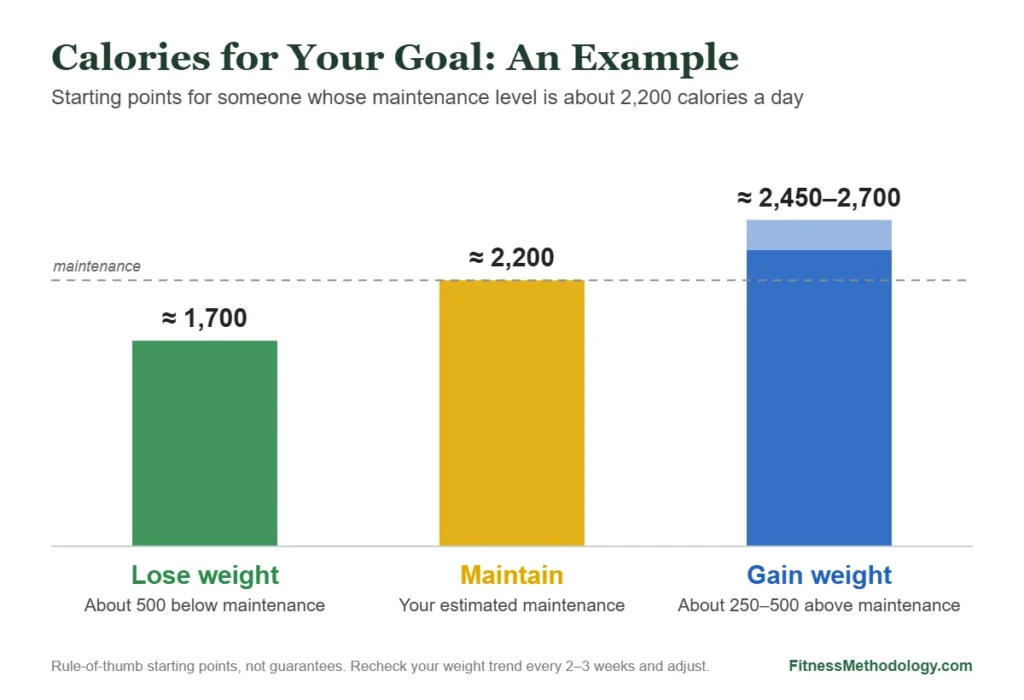
To lose weight, eat a little less than your maintenance number. A common starting point is about 500 calories below maintenance, so someone maintaining at 2,200 might try around 1,700.
Be realistic, though. As you get lighter, your body burns slightly fewer calories, so progress usually slows. The CDC notes that people who lose about 1 to 2 pounds a week are more likely to keep it off. Results vary from person to person, so treat any target as an experiment, not a promise.
Don’t go too low, either. Very low intakes make it hard to get enough protein, fiber and nutrients. If you’re planning a big cut, talk to a doctor or registered dietitian first.
Calories for Maintenance
Happy with your weight? Then the answer to “how many calories should I have?” is simply your maintenance number. Eat roughly what the table suggests for your age and activity, then watch your weight for two to three weeks. If it holds steady, you’ve found your maintenance zone. Building meals around a balanced diet makes this much easier.
How Many Calories to Gain Weight or Build Muscle
To gain weight, eat a bit more than maintenance. A common rule of thumb is a modest surplus of about 250 to 500 calories a day, paired with strength training so more of the gain is muscle. Bigger surpluses tend to add fat, not faster muscle. Our guide on how to gain muscle covers the training side.
Practical Tips to Find Your Number
There’s no perfect formula, but these habits make it much easier to answer “how many calories should I have?” for your own body.
- Track honestly for a week. Log your normal eating first. Small foods count too, as our breakdown of egg calories shows.
- Watch the weekly trend. Water and salt can shift the scale overnight.
- Adjust slowly. Change intake by 100 to 200 calories, then wait two weeks.
- Spot hidden calories. Drinks, oils, sauces and takeout add up fast. Pizza is a classic example.
- Choose filling foods. Protein and high-fiber foods keep you full on fewer calories.
Related: How to Figure Out Maintenance Calories: A Simple Step-by-Step Guide
FAQs
Is 2,000 calories a day right for me?
Not necessarily. The 2,000 figure on food labels is a general reference, not a personal target.
Should I eat back the calories I burn exercising?
Be cautious. The table’s activity levels already include regular exercise, and fitness trackers can be off. If you eat some back, start small.
Why has my weight loss slowed down?
As you lose weight, your maintenance number drops. Recheck your estimate after noticeable losses and adjust in small steps.
The Bottom Line
So, how many calories should I have? For most adults, the honest answer is somewhere between 1,600 and 3,000 a day, depending on age, sex, body size and activity. Start with the estimates, track your trend for a few weeks and adjust gently. For a tailored plan, a registered dietitian can help.
Written by Kashan | FitnessMethodology.com — Your trusted destination for practical fitness tips, smarter nutrition, and healthier living. We empower you to make smarter choices, build healthier habits, and achieving your fitness goals .
Health note: This article is general information, not medical advice. Check with a doctor or registered dietitian before making big changes to your diet or training, especially if you have a health condition, are pregnant or take medication. Read our full disclaimer.