If your lower back aches after a long day at a desk, you’re not alone. Here’s the short answer to how to strengthen your lower back: train the muscles that support your spine (your back extensors, glutes and deep core) with slow, controlled exercises two or three times a week, and build up gradually.
Below are three beginner-friendly moves I give new clients, plus how to progress safely.
3 Beginner Exercises to Strengthen Your Lower Back
Use a mat, move slowly and breathe normally. Expect effort, not pain.
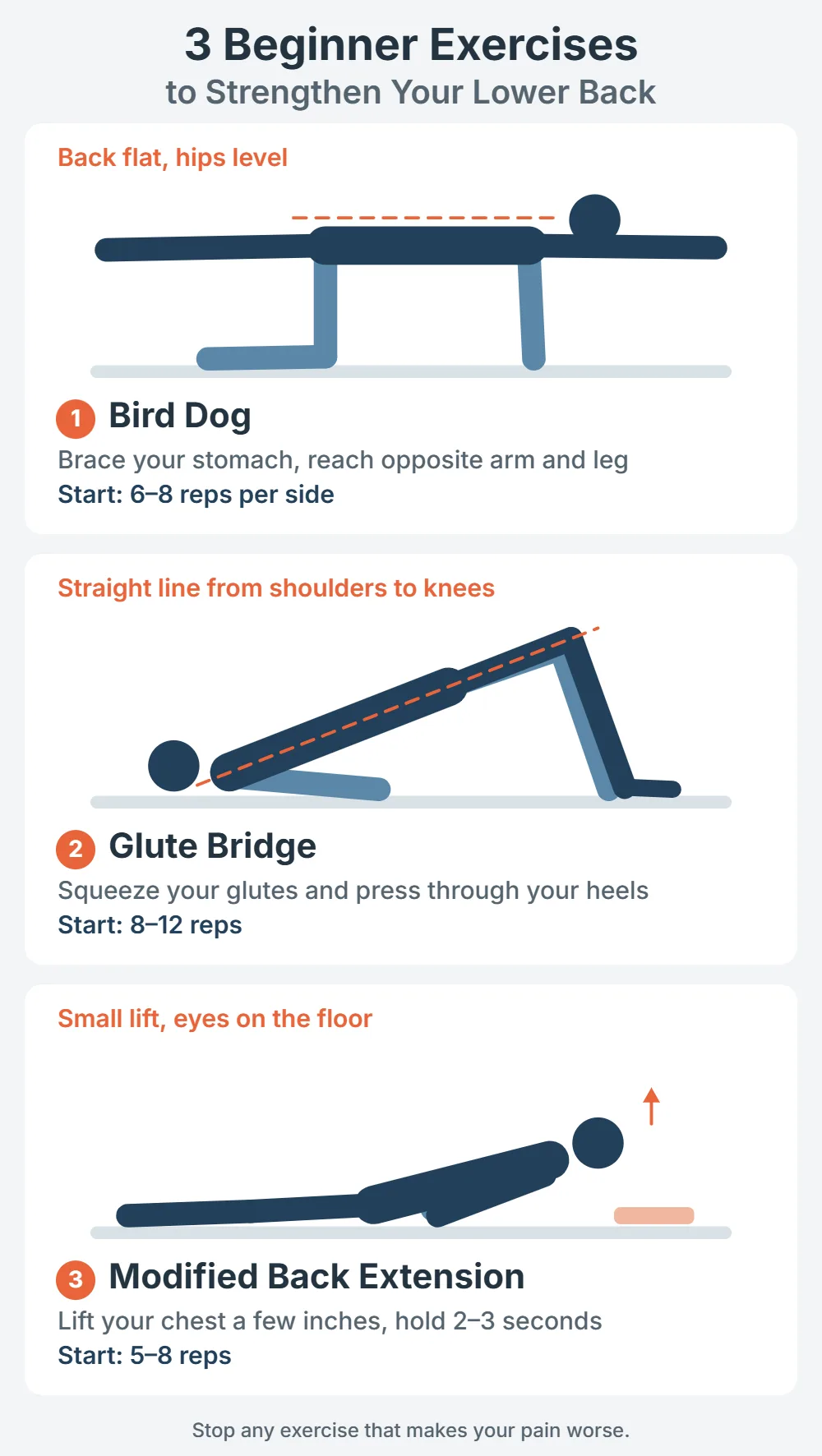
Bird Dog
The bird dog trains your back to stay steady while your limbs move.
- Start on hands and knees, hands under shoulders, knees under hips.
- Gently tighten your stomach, as if bracing for a light poke.
- Slide one leg back to hip height. If you feel stable, reach the opposite arm forward.
- Hold for 3 to 5 seconds with hips level, then return slowly and switch sides.
Start with: 6 to 8 reps per side.
Glute Bridge
Strong glutes take strain off your lower back.
- Lie on your back, knees bent, feet flat and hip-width apart.
- Tighten your stomach and squeeze your glutes.
- Press through your heels and lift until your body forms a straight line from shoulders to knees.
- Pause for 2 to 3 seconds, then lower slowly.
Start with: 8 to 12 reps. Mayo Clinic’s physical therapists suggest working up to 12 reps for up to three sets.
Modified Back Extension
This works the erector spinae, the long muscles beside your spine. “Modified” means keeping the movement small.
- Lie face down, forehead on a folded towel, arms by your sides.
- Squeeze your glutes and lift your chest a few inches, eyes on the floor.
- Hold for 2 to 3 seconds and lower slowly.
Start with: 5 to 8 reps. If lifting bothers your back, rest on your forearms instead and hold for a few breaths.
How Often to Train Your Lower Back and How to Progress
Train two or three non-consecutive days a week, doing one or two sets of each exercise at first. When a level feels easy with good form, change one thing at a time:
- Add reps: work up to 10 to 12 per side on bird dogs.
- Add time: hold each bridge for 5 to 10 seconds.
- Add a set: build up to three.
- Try a harder version: single-leg bridges, or arms reaching forward during back extensions.
Early progress mostly comes from your nervous system learning the movement (see what drives strength gains in beginners). After that, small increases keep you improving, the same progressive overload principle behind building muscle.
Common Mistakes to Avoid
- Rushing. Slow reps build control.
- Arching too far. Aim for a straight line or small lift, not maximum height.
- Holding your breath. Exhale as you lift.
- Twisting in the bird dog. Imagine a cup of water balanced on your lower back.
- Skipping sessions. Consistency builds a resilient back.
Why a Stronger Lower Back Helps
Strong back, glute and core muscles make bending, lifting and sitting easier. The NHS advises staying active rather than resting in bed when your back hurts, and notes walking, swimming, yoga and Pilates may help. Mayo Clinic also has a useful 15-minute back exercise routine. If your back feels tight rather than weak, our guide to muscle knots covers gentle ways to ease tension.
When to Stop and Get Help
Part of learning how to strengthen your lower back is knowing when to stop: drop any exercise that makes your pain worse. See a doctor or physical therapist if pain doesn’t improve after a few weeks, limits daily activities or keeps returning. If you have osteoporosis or a recent back injury or surgery, check with a professional first.
Get emergency medical help immediately if back pain comes with:
- New weakness, numbness or tingling in your legs
- Numbness around your genitals, buttocks or anus
- Loss of bladder or bowel control, or difficulty peeing
- Pain after a serious fall or accident
These can be signs of cauda equina syndrome, a rare but serious condition that needs urgent treatment.
FAQs
How long does it take to strengthen your lower back?
Exercises usually feel easier within a few weeks; noticeable strength gains typically take a couple of months.
Can I do these exercises every day?
Gentle daily practice suits many people, but two or three sessions a week build strength well.
Should I exercise if my lower back already hurts?
Gentle movement often helps. Keep it easy and stop anything that makes the pain worse.
Final Thoughts
Learning how to strengthen your lower back doesn’t require complicated workouts. Master these three moves, keep your form slow, and add a little each week. Your back will thank you.
Written by Kashan | FitnessMethodology.com — Your trusted destination for practical fitness tips, smarter nutrition, and healthier living. We empower you to make smarter choices, build healthier habits, and achieving your fitness goals .
Health note: This article is general information, not medical advice. Check with a doctor or registered dietitian before making big changes to your diet or training, especially if you have a health condition, are pregnant or take medication. Read our full disclaimer.