You’re rolling your shoulders after a long day at the desk, and your fingers land on it: a small, tender lump near the top of your shoulder that aches when you press it. Most of us call that a muscle knot. It’s a common complaint among people who lift, run or sit for hours.
So, what is a muscle knot, and what can you do about one? Here’s a plain-English look at why knots show up and how to ease them.
What Is a Muscle Knot?
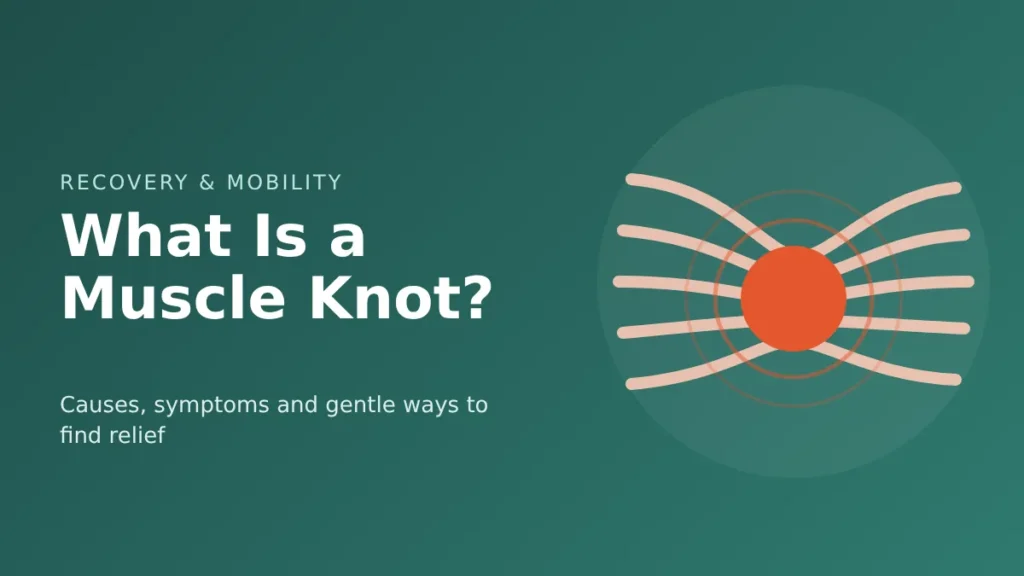
A muscle knot is a small, tight, tender spot inside a muscle. Doctors usually call it a myofascial trigger point. A review in American Family Physician describes trigger points as sensitive nodules within taut bands of muscle.
Despite the name, your muscle isn’t literally tied in a knot. It’s a patch of fibers that stays tight and irritated instead of fully relaxing, and researchers still debate exactly why. When knots cause ongoing pain, the condition is called myofascial pain syndrome.
Common Symptoms of a Muscle Knot
Knots tend to announce themselves in a few familiar ways:
- A deep, dull ache in one spot
- A firm or bumpy area that feels tender when you press it
- Stiffness or reduced range of motion
- Referred pain, where pressing the knot sends pain to a nearby area
According to Cleveland Clinic, some people also notice poor sleep, fatigue or headaches alongside the muscle pain.
What Causes Muscle Knots?
Experts at Mayo Clinic point to muscle overuse, injury and stress as likely contributors.
Repetitive Movement and Poor Posture
Typing for hours, carrying a heavy bag on one shoulder or repeating a lift with sloppy form keeps certain muscles working nonstop.
Doing Too Much, Too Soon
A sudden jump in training volume can overload muscles. Building up gradually, as we explain in our guide on how to gain muscle, lowers that risk.
Stress and Inactivity
Stress can make you clench your jaw or hike your shoulders without noticing. Long hours of sitting don’t help.
Where Muscle Knots Usually Show Up
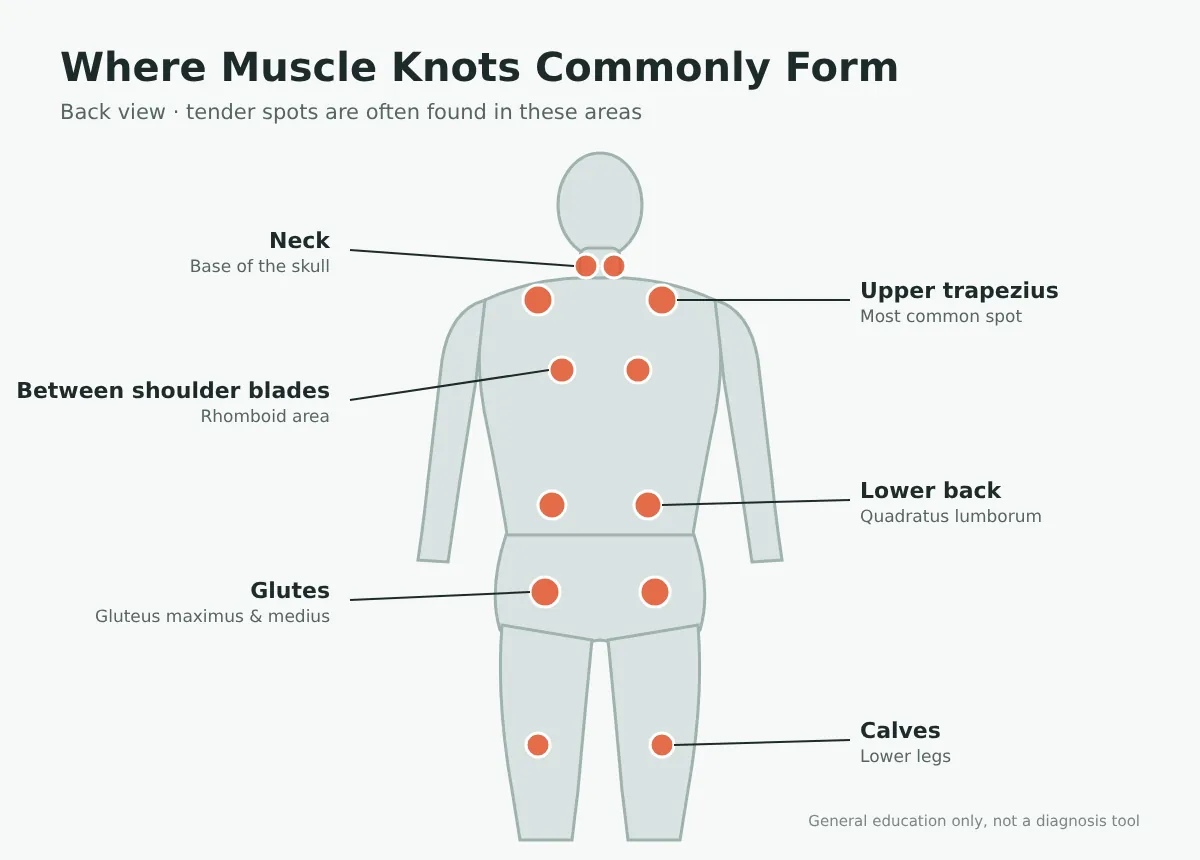
Knots can form in almost any muscle, but the back takes the brunt. The upper trapezius, running from your neck to your shoulder, is the most common spot, followed by the glutes and the quadratus lumborum in your lower back. The neck and calves are frequent trouble spots too.
How to Ease a Muscle Knot at Home
No trick melts a knot instantly, and results vary. These gentle options are a sensible place to start.
Gentle Stretching
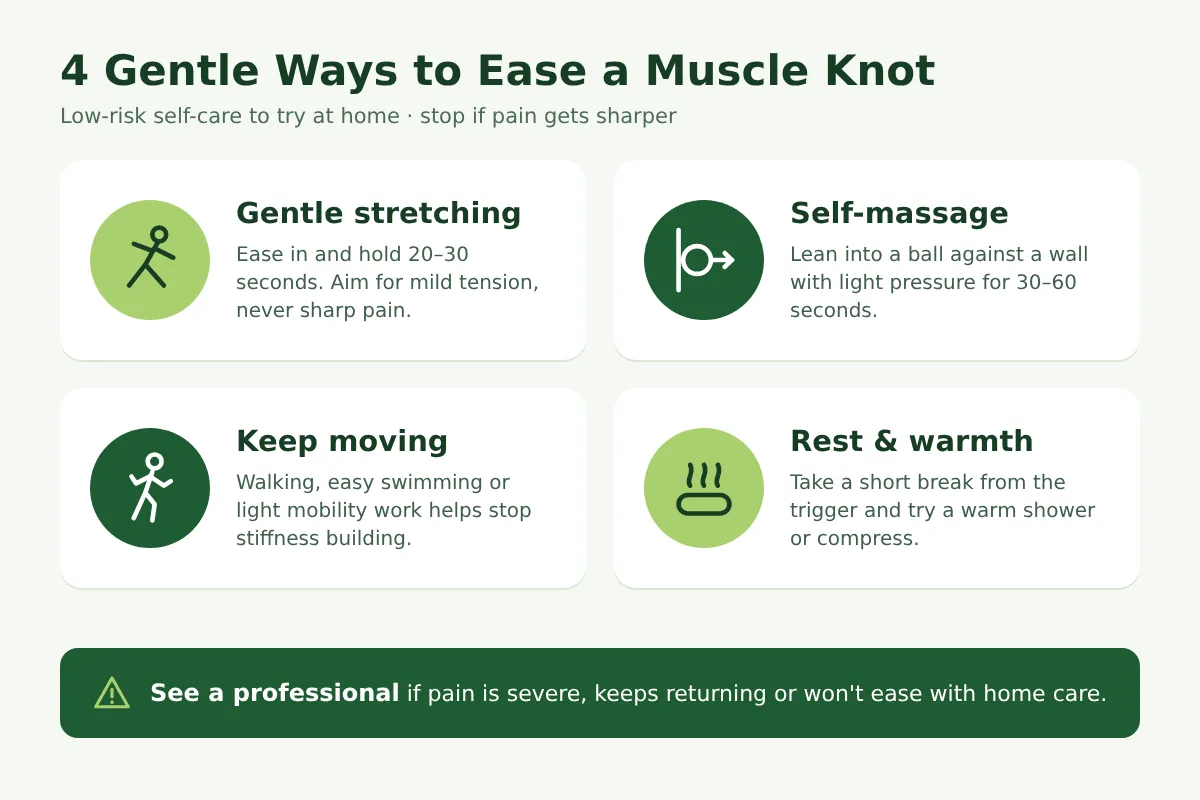
Ease into the stretch and hold it for 20 to 30 seconds. For a shoulder knot, try a slow neck tilt, bringing your ear toward the opposite shoulder. You should feel mild tension, never sharp pain.
Massage and Self-Massage
Doctors often suggest massage as a first-line option for trigger points. At home, place a tennis ball between the sore spot and a wall, then lean in gently for 30 to 60 seconds. Ease off if the pain gets sharper.
Keep Moving
Light movement like walking or easy swimming keeps tight muscles from stiffening further, and exercise has some of the better evidence for reducing trigger point pain. If you like the pool, our look at whether swimming builds muscle explains why it’s so joint-friendly.
Rest, Heat and Recovery Habits
Give an irritated muscle a short break from whatever set it off, and try a warm shower or compress to help it relax. Over time, good sleep, regular desk breaks and a sustainable approach to fitness make knots less likely to return.
When to See a Professional
See a doctor or physical therapist if the pain doesn’t improve with rest and home care or keeps coming back. Get urgent care if muscle pain comes with trouble breathing, dizziness, extreme weakness, a high fever with a stiff neck, or redness and swelling around the area.
Muscle Knot FAQs
Can You Pop a Muscle Knot?
Not really. That “release” during massage is the muscle relaxing, not something breaking apart, so pressing harder doesn’t help.
How Long Do Muscle Knots Last?
There’s no fixed timeline. Mild knots often improve with consistent self-care, but if yours isn’t easing or keeps returning, get it checked.
Is It a Muscle Knot or Something Else?
A pinched nerve, a muscle strain or another condition can feel similar. A professional can rule those out.
The Bottom Line
A muscle knot is a tight, tender spot often linked to overuse, posture and stress. Gentle stretching, light massage, movement and rest help many people feel better. If the pain is severe or won’t go away, get it assessed instead of pushing through.
This article is for general information and isn’t a substitute for personalized medical advice.
Health note: This article is general information, not medical advice. Check with a doctor or registered dietitian before making big changes to your diet or training, especially if you have a health condition, are pregnant or take medication. Read our full disclaimer.