If you’re an adult woman, a normal body fat percentage usually falls somewhere between about 21% and 35%. Where you land depends mostly on your age, activity level and genetics. There’s no single “perfect” number, and that’s good news: a healthy body can look many different ways.
Here’s what the research says, plus how body fat is measured and why BMI isn’t the same thing.
What Is the Normal Body Fat Percentage for a Woman?
Body fat percentage is the share of your weight that comes from fat. The rest is lean mass like muscle, bone, organs and water. Women naturally carry more fat than men, partly to support hormones, menstrual cycles and fertility.
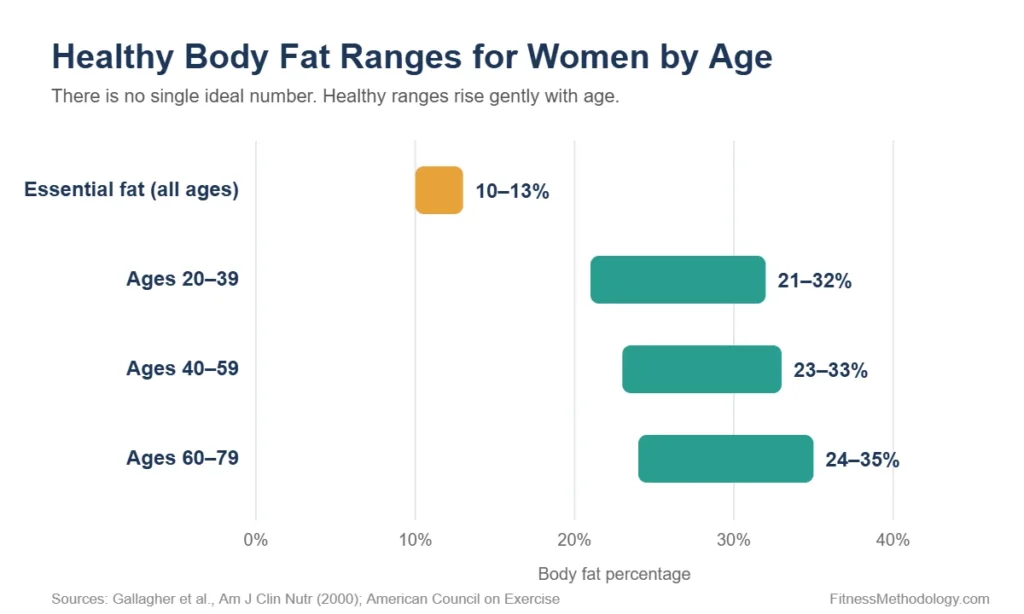
The most widely cited healthy ranges come from a 2000 study in the American Journal of Clinical Nutrition, which linked standard BMI categories to body fat measured with lab-grade methods:
| Age | Lower than typical | Healthy range | Higher than typical |
|---|---|---|---|
| 20–39 | Under 21% | 21–32% | 33%+ |
| 40–59 | Under 23% | 23–33% | 34%+ |
| 60–79 | Under 24% | 24–35% | 36%+ |
How Age Affects Your Range
The healthy range creeps up with each decade, and that’s expected. As we age, we tend to lose some muscle, and hormonal changes around menopause shift where fat is stored. A 55-year-old woman at 30% body fat sits comfortably inside her healthy range.
Fitness Level and Individual Differences
Two women of the same age can be equally healthy at different numbers. Genetics, ethnicity, pregnancy, medications and training history all play a part. The same study found Asian participants tended to carry more fat at the same BMI, one reason a single chart can’t fit everyone. Regular strength training also builds muscle, which can lower your percentage without much change on the scale.
Essential Body Fat: Your Body’s Minimum
Essential fat is the fat you need to function. It cushions organs, helps you absorb vitamins A, D, E and K, and supports reproductive hormones. The American Council on Exercise (ACE) puts essential fat for women at about 10–13%.
Getting close to this level isn’t a fitness goal. Very low body fat can disrupt periods, affect bone health and drain your energy. If you notice missed periods or constant fatigue while training hard, talk to a doctor.
Fitness-Related Body Fat Ranges
ACE also groups body fat by activity level. Treat these as general guides, not targets:
| Category | Women’s body fat |
|---|---|
| Essential fat | 10–13% |
| Athletes | 14–20% |
| Fitness | 21–24% |
| Acceptable | 25–31% |
| Obesity | 32%+ |
Competitive athletes may sit at 14–20% during their season, but plenty of fit, healthy women live in the 21–31% range for years. Curious about realistic progress? See how long it takes to build muscle.
How Body Fat Percentage Is Measured
Every method is an estimate with some margin of error:
- DEXA scan: A low-dose X-ray that maps fat, muscle and bone. Very precise, but pricier and clinic-based.
- Bod Pod or underwater weighing: Lab tests that estimate fat from body volume and density.
- Skinfold calipers: Affordable and fairly reliable when the same trained person measures you each time.
- Smart scales: Convenient, but readings shift with hydration, meals and exercise.
Consistency beats precision. Measure under similar conditions and watch the trend over months. A review of body composition methods notes that no technique is perfect in every situation.
BMI vs. Body Fat Percentage: What’s the Difference?
BMI uses only your height and weight. It can’t tell muscle from fat or show where fat is stored. The CDC describes BMI as a screening tool that doesn’t directly measure body fat.
So a muscular woman can land in the “overweight” BMI category with healthy body fat, while someone with a “normal” BMI may carry more fat and less muscle than ideal. Neither number should judge your health on its own.
Frequently Asked Questions
Is 25% body fat good for a woman?
Yes. For most adult women, 25% falls inside both the age-based healthy range and the ACE acceptable category.
Is 30% body fat too high for a woman?
Not necessarily. It sits within the healthy ranges above for adult women. Blood pressure, blood sugar, fitness and energy say more than one number.
How can I lower body fat in a healthy way?
Build habits you can keep: strength training, enough protein and fiber, good sleep and, if fat loss is your goal, a moderate calorie deficit. Start with our guides to how many calories you need and a balanced diet.
The Bottom Line
There’s no single ideal body fat percentage for every woman. For most adults, roughly 21–35% is normal, and the healthy range rises gently with age. Use these numbers as a guide, pair them with how you feel and your doctor’s checkups, and focus on strength, energy and habits you enjoy.
This article is for general information and isn’t a substitute for medical advice.
Written by Kashan | FitnessMethodology.com — Your trusted destination for practical fitness tips, smarter nutrition, and healthier living. We empower you to make smarter choices, build healthier habits, and achieving your fitness goals .
Health note: This article is general information, not medical advice. Check with a doctor or registered dietitian before making big changes to your diet or training, especially if you have a health condition, are pregnant or take medication. Read our full disclaimer.