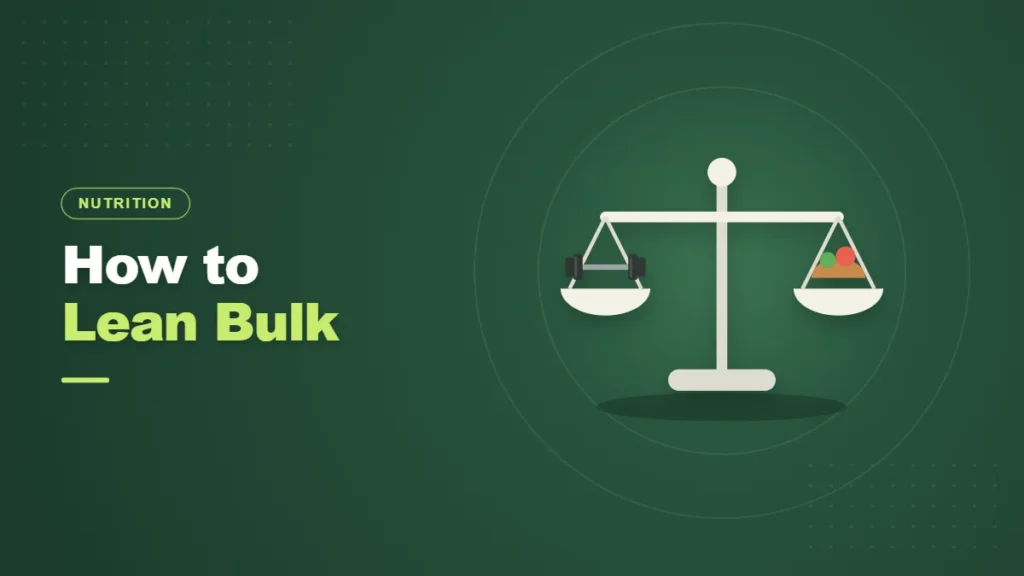
Here’s the quick answer on how to lean bulk: eat slightly more calories than you burn, get enough protein, lift with a plan that gets a little harder over time, and recover well. Then track your weight and strength, and adjust slowly.
The theory is simple. Staying patient is the hard part. Let’s walk through it.
What Is a Lean Bulk?
A lean bulk is a planned phase where you gain weight slowly on purpose, giving your body just enough extra energy to build muscle while keeping fat gain small.
A “dirty bulk,” where you eat everything in sight, works against you. Muscle can only grow so fast, so most of the extra food ends up as fat.
How to Lean Bulk: The Four Essentials
1. Keep Your Calorie Surplus Small
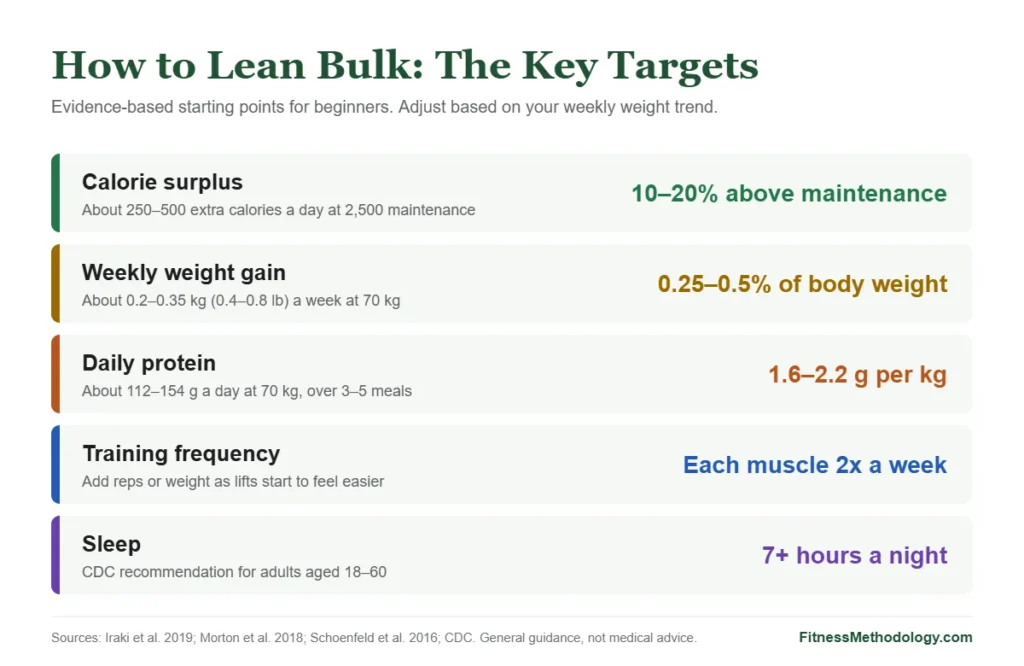
A review of off-season bodybuilding nutrition recommends eating about 10–20% above maintenance and gaining roughly 0.25–0.5% of your body weight per week if you’re a beginner or intermediate lifter.
At 2,500 maintenance calories, that’s an extra 250–500 a day. For a 70 kg (154 lb) person, it works out to about 0.2–0.35 kg (0.4–0.8 lb) per week.
2. Eat Enough Protein
A large meta-analysis found that, on average, muscle gains from strength training leveled off at around 1.6 g of protein per kilogram of body weight per day. Many lifters aim a bit higher, up to about 2.2 g/kg.
That’s roughly 112–154 g a day for a 70 kg person, which is easier to hit across three to five meals.
3. Train With Progressive Overload
Extra food only becomes muscle if your training gives your body a reason to build it. Train each major muscle group at least twice weekly, which a 2016 meta-analysis linked to better growth than training it once a week.
Add a rep or a little weight when an exercise starts to feel easier. Our guide on how you gain muscle covers the basics.
4. Don’t Skimp on Recovery
Muscle grows between workouts. The CDC recommends at least seven hours of sleep a night for adults. If your lifts keep dropping, check your sleep and stress before blaming your diet.
How to Estimate Your Calories as a Beginner
You don’t need a lab test:
- Estimate your maintenance calories with a tool like the NIH Body Weight Planner or our guide to daily calorie needs.
- Add 10–20% to that number.
- Eat that amount for two weeks.
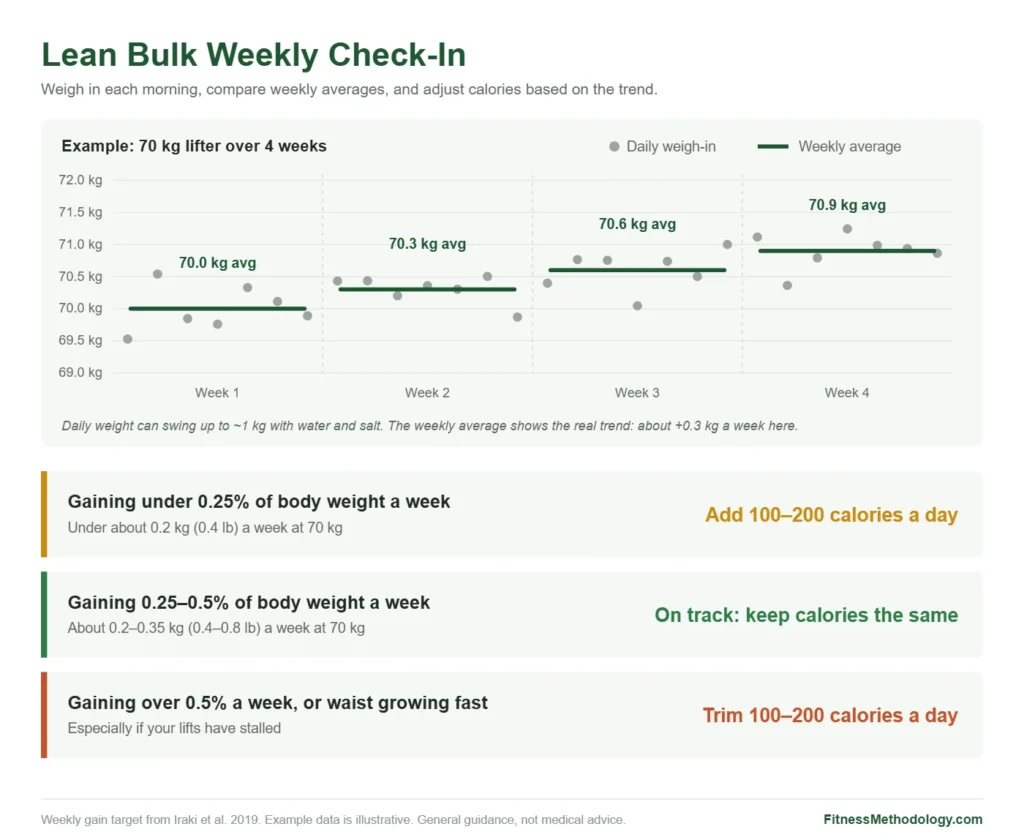
- Weigh in each morning and compare weekly averages.
- Adjust by 100–200 calories if you’re gaining too fast or too slowly.
Calculators only estimate. Your scale trend is the real answer.
How to Track Weight and Strength Progress
- Body weight: Track the weekly average. Daily numbers swing with water and salt.
- Strength: Log your workouts. Steadily climbing lifts mean the surplus is working.
- Waist: Measure monthly. A fast-growing waist with stalled lifts usually means too much food.
- Photos: Take them every four weeks.
Best Foods for a Lean Bulk
Build most meals around minimally processed foods:
- Protein: chicken, fish, lean beef, eggs, Greek yogurt, lentils, tofu
- Carbs: oats, rice, potatoes, whole-grain bread, fruit
- Fats: nuts, peanut butter, olive oil, avocado
Simple Meal Planning Tips
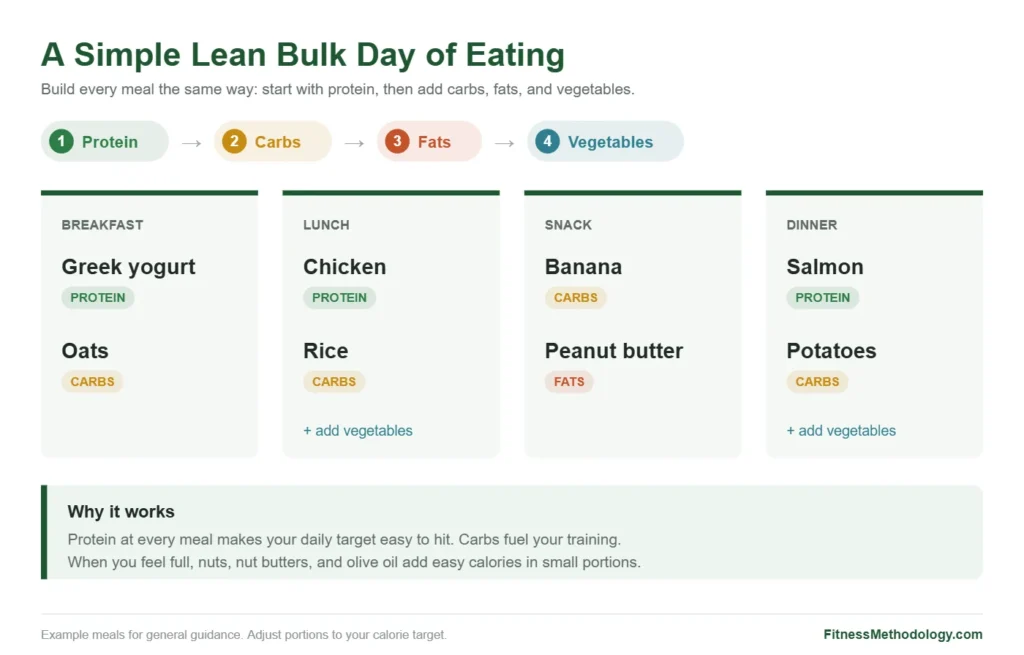
Start each meal with protein, then add carbs, fats, and vegetables. A simple day: oats with Greek yogurt, chicken with rice, a banana with peanut butter, and salmon with potatoes. Carbs fuel training, while nuts and oils add easy calories when you’re full. For more ideas, see our balanced diet guide.
Common Lean Bulk Mistakes (and How to Limit Fat Gain)
- Eating too much, too fast: If you’re gaining well over 0.5% of your body weight a week, trim 100–200 calories.
- Program hopping: Stick with one plan long enough to see progress.
- Overreacting to the scale: Judge trends over two to three weeks.
- Expecting fast results: Muscle builds slowly. See this realistic muscle-building timeline.
You don’t need mass gainers or special supplements. Food, training, and sleep do the heavy lifting.
Lean Bulk FAQs
How long should a lean bulk last?
Usually several months. A few weeks rarely shows noticeable muscle.
Can beginners lean bulk?
Yes. Beginners often respond quickly to training. Keep the surplus small and focus on technique.
Can I do cardio while lean bulking?
Yes. Moderate cardio supports heart health. Just eat enough to cover what you burn.
Do I need to count calories forever?
No. Track for a few weeks to learn portions, then rely on weekly weigh-ins.
The Bottom Line
Learning how to lean bulk comes down to a few habits: a small surplus, enough protein, progressive training, and good recovery. Track your weight and lifts, adjust slowly, and give it time. Slow gains you keep beat fast gains you’ll diet off later.
Written by Kashan | FitnessMethodology.com — Your trusted destination for practical fitness tips, smarter nutrition, and healthier living. We empower you to make smarter choices, build healthier habits, and achieving your fitness goals .
Health note: This article is general information, not medical advice. Check with a doctor or registered dietitian before making big changes to your diet or training, especially if you have a health condition, are pregnant or take medication. Read our full disclaimer.